- Active & Green
Foliage in the Oltrepò Pavese: where to see the colours of Autumn
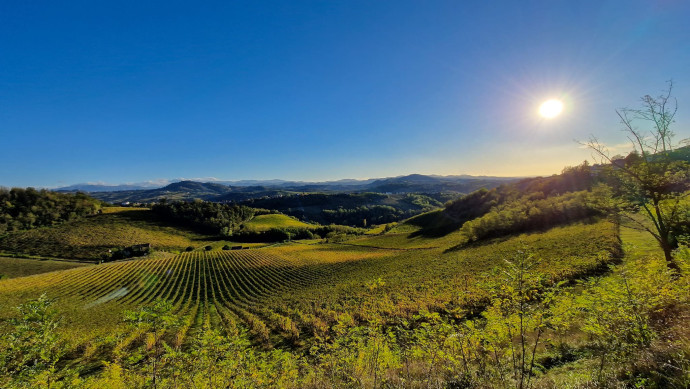
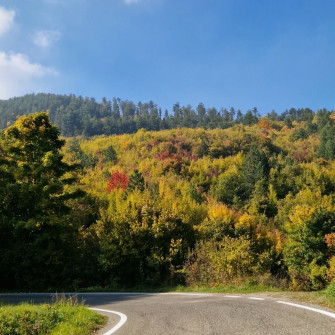
Autumn in the Oltrepò Pavese arrives slowly and transforms the landscape without ever making it look the same twice. In the mountains, chestnut and beech trees change colour; along the ridges the view opens onto the valleys; lower down, the vine-covered hills glow yellow, orange and red.
It is precisely this variety that makes foliage in the Oltrepò Pavese so interesting: within a few dozen kilometres you travel from the centuries-old chestnut trees of Bralello to the woods of Monte Lesima, from the beech forests of Monte Penice to the vineyards of the Valle Versa, all the way to the medieval villages of Varzi, Pietragavina and Montesegale.
The season generally runs from mid-October to mid-November, with autumn arriving first at higher altitudes and later on the hills. Conditions can vary from year to year, however, depending on temperature and rainfall.
Brallo di Pregola and Bralello: the foliage of the great chestnut trees
To begin exploring the foliage of the Alto Oltrepò, you can start from Brallo di Pregola, one of the main reference points for trekking in the Pavia Apennines.
From the village, at around 950 metres above sea level, you can reach the hamlet of Bralello, at about 1,000 metres, in just a few minutes. From here starts the Sentiero dei Briganti (Brigands' Trail), which descends along a mule track towards the Bosco dei Giganti (Giants' Wood), one of the most distinctive places in the Oltrepò for admiring centuries-old chestnut trees. The full route to Fego is about 4.3 kilometres long, with 400 metres of ascent and a medium level of difficulty.
In the wood you will come across dozens of monumental chestnut trees, some with circumferences of more than five metres. One of the most imposing specimens measures around nine metres. These trees also tell the agricultural history of these mountains: for centuries the chestnut was a staple food for Apennine communities.
In autumn, this part of the territory offers one of the most intense displays of foliage in the Oltrepò. The path enters the chestnut grove and the colour changes gradually: from the last green of the canopy to the yellows and browns of the leaves, and then to the carpet that covers the forest floor.
From the beech forests of Brallo to Monte Lesima
The area around Brallo di Pregola is not limited to the chestnut groves of Bralello. From here opens up one of the most interesting mountain systems of the Alto Oltrepò, which includes Monte Lesima, the Passo della Scaparina and Monte Penice.
Monte Lesima, at 1,724 metres, is the highest peak of the Ligurian-Piedmontese-Pavia Apennines. The Le Torraie–Monte Lesima Nature Reserve and Site of Community Importance (SCI) includes extensive beech forests at the higher elevations and hop hornbeam woods lower down, alternating with the grasslands of the ridge.
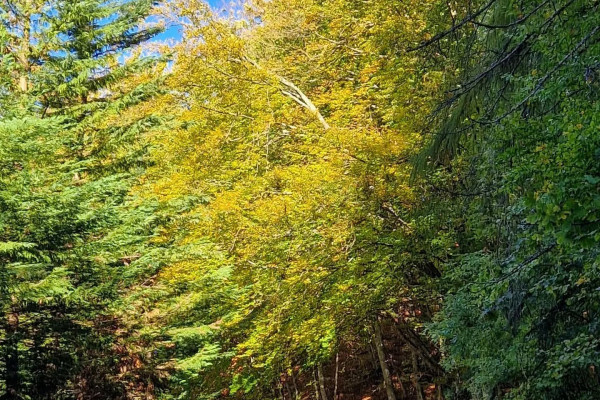
It is here that the foliage changes character once again. After the great chestnut trees of Bralello, as you climb to higher altitudes the beech becomes one of the protagonists, and the landscape takes on more uniform, deeper colours.
Monte Lesima can be reached via a network of trails with several access points, including Piani di Lesima, the Brallo–Giovà road, Rovaiolo Vecchio and Piani di Cavanna.
For those who like to alternate woodland and panoramic views, this is one of the most interesting areas of the Apennine autumn: from the summit, on clear days, the view opens over the surrounding valleys and can even reach a sliver of the Ligurian Sea.
Passo della Scaparina and Monte Penice: following the ridge of the Alto Oltrepò
The ideal route to continue exploring the autumn landscape of the Alto Oltrepò follows the system of ridges towards the Passo della Scaparina and Monte Penice.
The same road network that connects the Brallo area leads to the territory of Romagnese and the Passo della Scaparina, or to Monte Penice via the Val Trebbia and the Penice pass.
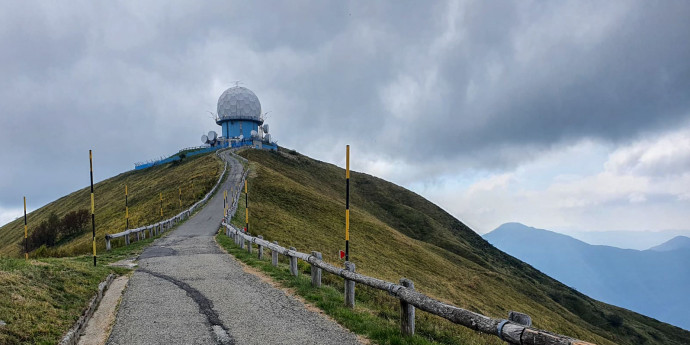
Monte Penice, at 1,460 metres, is one of the great panoramic balconies of the Oltrepò. In autumn, the woods are joined by views over the ridges and valleys, creating a landscape that changes continuously throughout the day.
It is precisely this geographical continuity that makes autumn in the Alto Oltrepò so compelling: not a random succession of spots to photograph, but one great landscape that rises gradually from the hills of Varzi to the woods and ridges of the Apennines.
Pietragavina and Varzi: foliage among chestnut groves, villages and castles
Descending from the Penice pass towards Varzi, a particularly interesting stop is Pietragavina, a hamlet of the municipality of Varzi located at over 700 metres above sea level.
Pietragavina is a small village dominated by its castle and surrounded by woods. It is no coincidence that autumn here has a special connection with the chestnut: the area hosts a traditional Chestnut Festival (Sagra della Castagna).
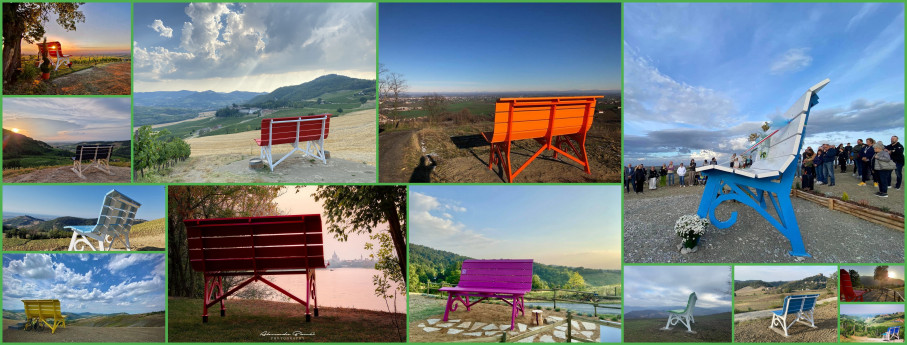
A short distance away, Varzi offers another perspective on the foliage: that of the historic town overlooking the valley. From Varzi's Giant Bench (Panchina Gigante), in the hamlet of Santa Cristina, you can look out over the surrounding woods and, on the clearest days, see the castles of Pietragavina and Oramala.
It is an ideal area for combining a walk among the colours of autumn with a visit to Varzi's historic centre and a stop to enjoy local traditional products.
Sant'Alberto di Butrio and Oramala: the foliage of the Valle Staffora
Continuing along the Valle Staffora, the landscape becomes more secluded.
The Hermitage of Sant'Alberto di Butrio is surrounded by woods and makes a particularly evocative starting point for an autumn walk. From here, the route towards Oramala leads into a landscape of chestnuts, oaks and other broadleaf trees.
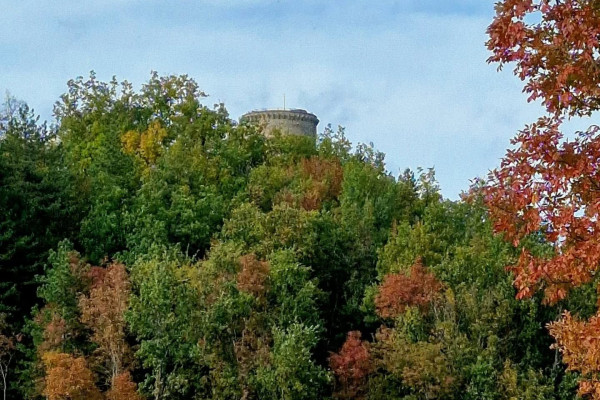
Oramala Castle, at 758 metres above sea level, emerges from the vegetation at the top of the hill. In autumn, the contrast between the fortress and the woods that surround it becomes one of the most interesting subjects to look for with your camera.
Montesegale: foliage among woods and castle
If you are looking for a gentler landscape, where the foliage of the woods blends with the presence of historic villages, it is worth heading towards the Valle Ardivestra to reach Montesegale.
The village is dominated by its medieval castle and lies in a landscape very different from the higher areas of the Oltrepò. Here the hills are covered mainly with broadleaf woods, chestnut groves and farmland.
In autumn, Montesegale becomes especially photogenic thanks to the relationship between the village and its surroundings: the castle walls emerge from the greenery and the autumn hues, while the hills of the Valle Ardivestra layer one over another in the background.
Late afternoon is a good time to photograph it, when the side light highlights the profile of the castle and the shapes of the hills. The early hours of the morning can also offer mist and interesting perspectives over the valley.
Zavattarello: the castle among the autumn woods
Continuing between the Alto Oltrepò and the Val di Nizza, it is worth visiting Zavattarello, one of the most characteristic villages of the Pavia Apennines. The village enjoys a panoramic position among woods, hills and vineyards, and its profile is dominated by the Castello Dal Verme, which looks out from the top of the hill over the village and the surrounding landscape.
In autumn the castle takes on a special charm: the stone of the fortress contrasts with the colours of the surrounding woods, and from the terrace and the tower a wide view opens over the hills and woods of the Oltrepò Pavese, all the way to the Po Valley plain. The castle also stands within a natural park of about 80 hectares.
Zavattarello is also a good choice for those who want to combine foliage with a walk. The upper Val di Nizza is crossed by trails through oak and beech woods, springs and small villages. The Sentiero delle Fontane (Fountains Trail), in the nearby area of Poggio Ferrato, is a route of about 7 kilometres that runs through this very landscape, linking nature, water and rural architecture. The same network of paths makes it possible to put together itineraries that include both Zavattarello and Varzi.
In this area, foliage is combined with another typical element of the Oltrepò: its historic villages. After a walk in the woods, you can head down to the centre of Zavattarello and wander through the streets of the ancient medieval village up to the fortress.
Autumn is also a season closely tied to local gastronomy. Mushrooms, honey, chestnuts and traditional dishes accompany the autumn events of the area, such as the honey and mushroom festival held in Zavattarello.
Foliage changes colour between the Valle Staffora and the Valle Versa
Moving further down towards the hills, the woodland gradually gives way to the vineyards of the Oltrepò Pavese.
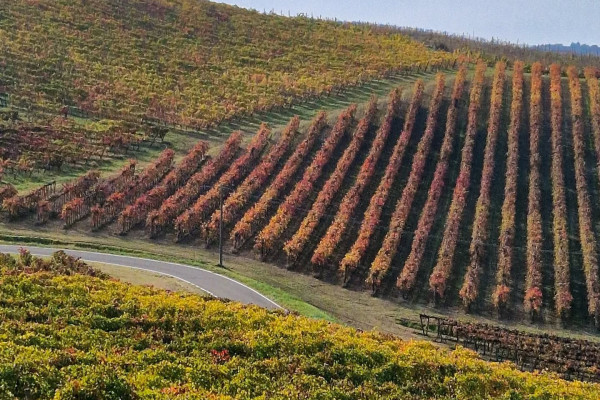
Here foliage takes on a completely different form: it is the vine rows that colour the landscape and draw great patterns across the hills.
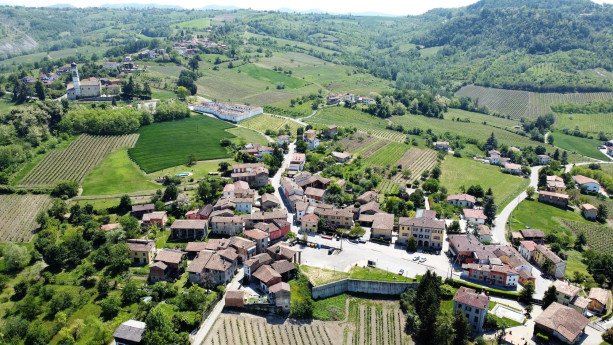
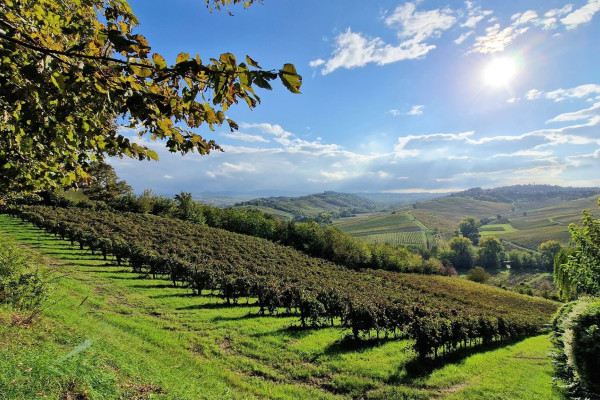
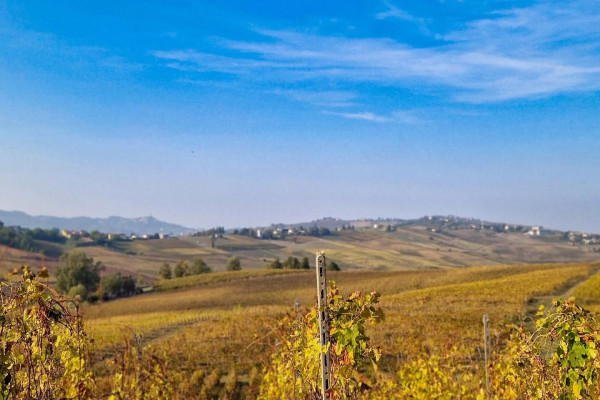
The Valle Versa, between Santa Maria della Versa, Golferenzo, Volpara and Canevino, is one of the areas to watch when the vine leaves begin to change colour. Seen from above, the vineyards become a succession of yellows, oranges and reds.
Golferenzo, perched on its hill, offers one of the most interesting viewpoints over the valley and its vineyards.
Costa del Vento and Montalto Pavese: foliage seen from above
Another spot to mark on your map is the Costa del Vento in Montalto Pavese, on the ridge between the Valle Scuropasso and the Valle Ghiaie.
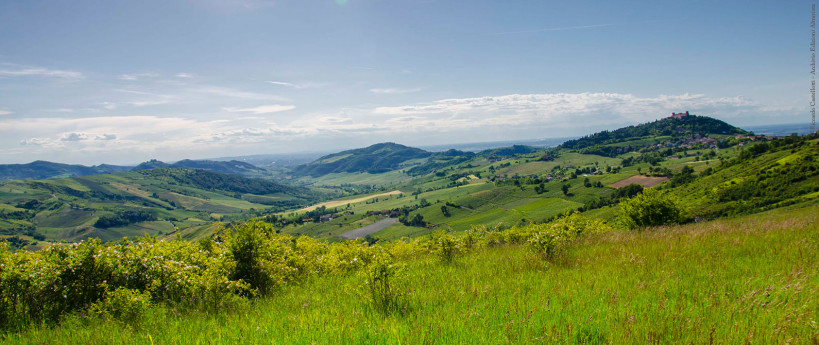
Here foliage is appreciated above all as a landscape. From the panoramic points you can take in vineyards, hills, woods and villages of the Oltrepò all at once.
It is the right place for anyone looking for a wide-angle photograph, especially in the late afternoon, when the raking light brings out the succession of ridges.
How to photograph foliage in the Oltrepò Pavese
Photographing foliage does not necessarily require professional equipment.
In the woods, the early hours of the morning work well, when the light is softer and can filter through the canopy. On the vine-covered hills, the late afternoon hours are particularly interesting.
A slightly overcast day can be ideal in the woods because it reduces overly harsh contrasts. A telephoto lens helps visually compress ridges and vine rows, while a wide-angle lens lets you capture the surrounding environment.
Above all, it is worth leaving room for surprise: in the Oltrepò, foliage is not concentrated in a single spot, but accompanies the journey.
Tips for enjoying the foliage
Before setting off, keep in mind that trails can become slippery in autumn, especially after rain. For hikes, shoes with good grip, layered clothing and a waterproof jacket are recommended.
For routes at altitude, it is always advisable to check the weather conditions and the possible presence of snow or ice.
In vineyards and farmland, it is important to stay on roads and paths open to the public, without entering private property.
Finally, autumn is also a good opportunity to combine a walk with a gastronomic stop: between Varzi, the Valle Staffora and the Valle Versa, the landscape can become the common thread of a day of nature, villages and flavours in the Oltrepò.
Frequently Asked Questions about Foliage in the Oltrepò Pavese
When is the best time to see foliage in the Oltrepò Pavese?
Generally between mid-October and mid-November, although the timing can vary depending on altitude and the weather over the course of the year.
Where can I see centuries-old chestnut trees?
The main area is Brallo di Pregola, in particular Bralello and the Bosco dei Giganti (Giants' Wood), which can be reached along the Sentiero dei Briganti (Brigands' Trail).
Where can I see foliage in the mountains?
For the woods and panoramic views of the Alto Oltrepò, the system formed by Brallo di Pregola, Monte Lesima, the Passo della Scaparina and Monte Penice is well worth exploring, with environments that change gradually as you climb in altitude.
Where can I see foliage near Varzi?
Pietragavina, Varzi, Santa Cristina and the road towards Monte Penice offer a combination of woods, chestnut groves, villages and views over the Valle Staffora.
Where can I photograph a village immersed in autumn colours?
Montesegale, in the Valle Ardivestra, is especially interesting for the interplay between its medieval castle, the village and the wooded hills.
Where can I see foliage in Zavattarello?
Zavattarello stands out for the relationship between the Castello Dal Verme, the medieval village and the woods of the Alto Oltrepò. From the fortress you can look out over the surrounding hills and woodland, while in the nearby areas of the Val di Nizza you can follow trails through oak and beech woods and small villages.
Where can I see foliage among the vineyards?
The Valle Versa, with Golferenzo and the other hill villages, and the Costa del Vento area in Montalto Pavese are among the best places to observe the transition from the colours of the woods to those of the vineyards.