- Tourism Accessible
- Active & Green
- Art & Culture
STAI 2: Services for Accessible and Inclusive Tourism
The Province of Pavia is leading an ambitious project to make inclusive tourism a new quality standard for the region.
With a total investment of €6.1 million and an operational horizon extending to June 2027, the project STAI 2 – Services for Accessible and Inclusive Tourism aims to make Pavia and its province fully enjoyable by everyone: people with physical, sensory and cognitive disabilities, the elderly, families with young children, and anyone with accessibility needs.
At the heart of the project are concrete infrastructure interventions, designed to transform already beloved visitor destinations into spaces that are truly open to all.
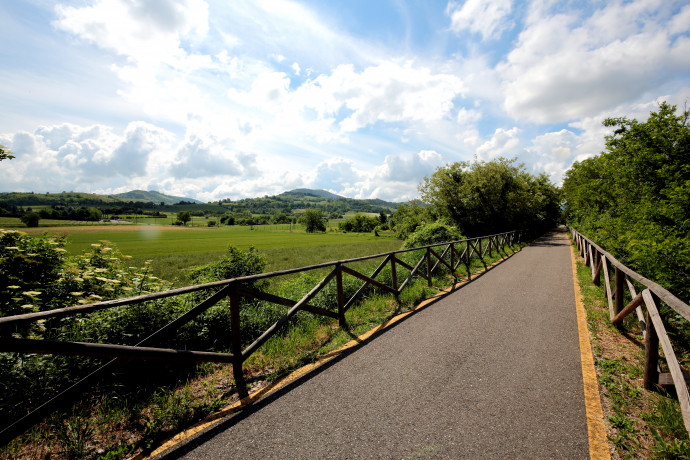
The Greenway Voghera–Varzi will be enhanced with tactile signage, inclusive furnishings, equipped rest stops and a three-dimensional tactile map in Varzi: a nature trail through the vineyards of Oltrepò Pavese, finally navigable independently by every type of visitor.
The university campus and urban routes of Pavia will be upgraded with accessible itineraries connecting the historic buildings of the city centre, enriched by multimedia totems featuring tactile maps, QR codes and audio guides — tools designed for tourists, students and residents alike.
The Auditorium of the Employment Centre in Voghera will be transformed into a fully inclusive space, with reserved seating, Italian Sign Language (LIS) technology and real-time subtitling.
An app and a portal for planning before and during your trip
Planning an accessible holiday requires reliable, up-to-date information. STAI 2 works on two digital fronts:
The Lombardia Facile portal will be enhanced with a systematic mapping of accessible tourist facilities and services in Pavia and Sondrio, with multilingual content in text, audio and video formats, verified and certified.
A dedicated accessible tourism app will also be developed, complementary to the portal, with augmented reality features, geolocation of nearby accessible services, personalised notifications, offline mode, and the ability for users to report barriers or suggest improvements — a system that grows with the community that uses it.
For tourists with hearing disabilities, the "112 Sordi" app and the "112 Where Are U" service will be integrated into the tourism context, providing automatic geolocation and facilitated communication with emergency services.
Training, employment and hospitality
Accessibility is not just a matter of ramps and maps. STAI 2 also invests in training for tourism operators — guides, accommodation managers, transport staff — with specific programmes on inclusive hospitality, assistive technologies and accessibility regulations.
On the employment front, the project provides for the activation of 20 specialist internships in the tourism sector for people with disabilities, in collaboration with employment centres and local businesses: a pathway towards economic independence and genuine social inclusion.
A local network that makes the difference
STAI 2 is not a top-down project. It involves over 60 stakeholders, including institutional partners, disability associations, municipalities, foundations and businesses. Key partners include the Province of Sondrio, the University of Pavia, the Chamber of Commerce of Cremona, Mantova and Pavia, and the main representative associations such as ENS, LEDHA-CRABA, UICI Lombardia, ANFFAS and ANMIC Lombardia.
At the local level, municipalities including Voghera, Miradolo Terme, Rivanazzano Terme and Godiasco have joined, together with the Oltrepò Pavese Mountain Community — ensuring the project is firmly rooted in the real needs of local communities.
Project figures
Total budget €6,112,000 Duration 24 months (June 2025 – June 2027) Infrastructure interventions 10 Inclusive internships 20 Partners and supporters 60+ Estimated growth in tourist flows +15%With STAI 2, the Province of Pavia goes beyond removing a few architectural barriers: it is building a model of tourism in which accessibility is the standard, not the exception. A territory that chooses to be open to everyone is a territory that is more attractive, more vibrant and more equitable.
MILAno-CORTINA
As part of the project, specific actions were promoted to increase the accessibility of tourist services — both through interventions aimed at facilitating the enjoyment of the Milan–Cortina 2026 Winter Olympic and Paralympic Games by people with disabilities, and through additional actions to be implemented in synergy across other strategic destinations. Through an agreement with Fondazione Milano Cortina 2026 — the body responsible for organising the Games — services have been developed to promote the inclusion of spectators and all people with visual, hearing and intellectual disabilities at the venues hosting competitions or the Olympic Opening Ceremony.
ACCESSIBILITY FOCUS
Training programmes will be provided for tourism professionals, with a focus on accessibility, engaging with customers with disabilities, inclusive marketing and managing experiences that are enjoyable for all. The activation of 20 internships for people with disabilities is also planned, in the sectors of hospitality, tourism promotion, catering and cultural services, alongside cross-cutting actions to qualify and promote inclusive hospitality and train sector operators. All project phases will involve the direct participation of people with disabilities.
PROVINCE OF PAVIA TERRITORIES
With regard to the territory of the Province of Pavia, interventions are planned to upgrade routes such as the Greenway Voghera–Varzi, along with a series of actions aimed at promoting accessible and inclusive visitor itineraries.
GREENWAY VOGHERA–VARZI
Improving the accessibility and usability of the Greenway Voghera–Varzi: the goal is to make this cycle-pedestrian route a safer and easier space to enjoy, enabling people of differing abilities to experience not only the trail itself but also the equipped green spaces along the route (Codevilla and Rivanazzano) and to discover and appreciate the municipalities along the way.
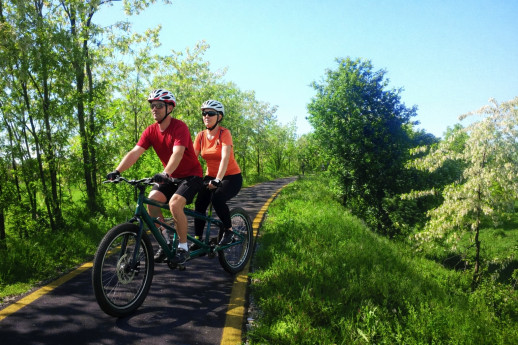
To facilitate use of the Greenway by people with motor or sensory disabilities, a bicycle rental service adapted for people with limited mobility will be introduced (tandems and tricycles for disabled users, with pedal assistance) along with guides, offering the possibility of cycle tours that bring together blind or partially sighted cyclists and enthusiastic volunteers who pedal together in a unique shared experience of adventure. Two vehicles of different sizes will be made available in Voghera and two in Varzi, to accommodate riders of varying heights. The collaboration between guides and blind cyclists represents an added value of the project — piloting a tandem requires trust and cooperation, and the emotions shared on these two-seater bicycles can turn simple travel companions into lifelong friends.
SIGNAGE UPGRADES
A further activity concerns the enhancement of vertical and horizontal signage along the entire cycle-pedestrian route. The aim is to provide users with the information needed to know their position and identify points of cultural and natural interest along the way, through the installation of tactile maps and information totems. Specific attention will be given to the various road crossings along the Greenway to improve safety levels, through interventions involving both surface materials and signage. Changes to paving, possible road raised tables to slow vehicle traffic, appropriate pictograms, and horizontal and vertical signage are among the measures that may be implemented.
Furnishings and aids along the route will also be upgraded: waste sorting bins, seats with armrests (to assist elderly people in sitting and standing), leaning supports, and tables with offset seating to facilitate use by wheelchair users. Additionally, the parks at Codevilla and Rivanazzano will be equipped with play facilities and equipment suitable for people with motor disabilities, encouraging inclusive recreational moments.
Further activities will focus on the two endpoints of the Greenway: Voghera and Varzi. In Voghera, the starting point of the cycle-pedestrian route will be made more recognisable: an entrance gateway with appropriate horizontal and vertical signage and an information totem presenting the route, its characteristics and highlights will be created. The stretch of cycle path from the railway station and main car parks to the start of the Greenway will also be made more visible and clearly identifiable, to facilitate access.
In Varzi, the following key activities are planned: identification of a safe, barrier-free route between the two tourist information points in the municipality, through an appropriate system of signage (both horizontal and vertical) and maps; renovation of the information totems in Piazza Umberto I, aligning them with the signage that will characterise the route between the two infopoints and the entire Greenway. A three-dimensional map of the historic village centre will also be created, to be positioned at the arrival point of the Greenway as a welcome feature and to encourage trail users to visit the village.
INCLUSIVE UNIVERSITY AND CITY
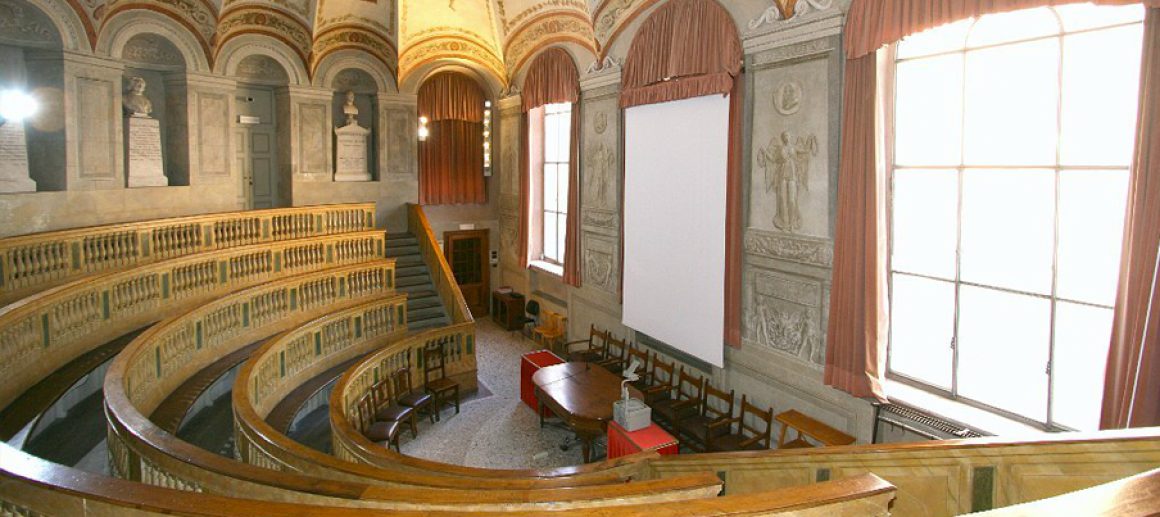
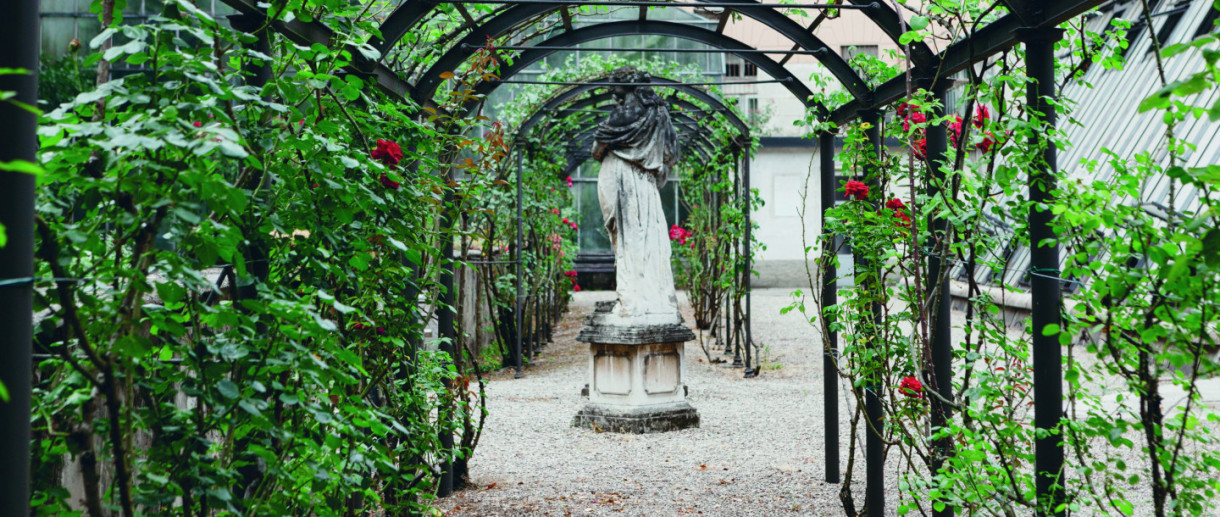
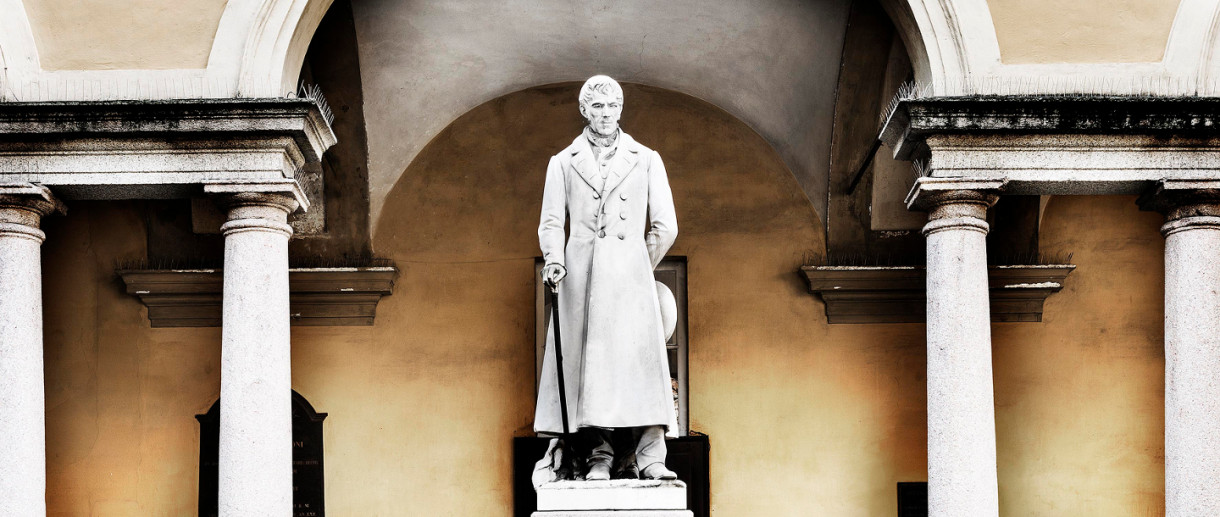
Urban itineraries for discovering Pavia: actions will focus on identifying accessible routes connecting the university spaces in the historic city centre (Palazzo Centrale, San Tommaso, San Felice, Palazzo Botta, ex Mondino and the Botanical Garden) and enabling visitors to learn about these significant buildings — part of the city's history and now prestigious university premises — through an indoor trail and a multimedia totem.
BARRIER-FREE ROUTES
The University of Pavia has already worked on urban accessibility, mapping various areas of the historic centres of Pavia, Voghera and Vigevano, using a well-established survey methodology developed and refined over more than 18 years of activity. Using a survey form based on specific indicators (paving, street furniture, signage, parking, aids, etc.), the conditions of the streets connecting the various university buildings will be assessed, and the critical issues to be resolved to promote wider and more inclusive use will be identified. This work will produce a map indicating one or more barrier-free routes along which users can move freely and safely between buildings, regardless of their abilities. Once the route is identified, it will need to be effectively communicated and highlighted: a downloadable map from various online portals (Province, Municipality, UNIPV, etc.) accompanied by an audio guide and dedicated signage to help users recognise the route is envisaged. At this stage, the inclusion of information about significant buildings encountered along the accessible route is also being considered.
INFORMATION TOTEMS
This action also includes the installation (near the main entrance of each building) of multimedia information totems that, through both physical and digital aids, will allow visitors to learn about the history, evolution and current use of each building. The totems will be designed using materials and forms that make them easily identifiable and will provide information in multiple languages and formats (tactile map, QR code linking to an audio guide of the building and accessible route, etc.), enabling an augmented reality experience for the exploration and enhancement of historic architectural heritage. The action is strongly interdisciplinary and will involve the collaboration of several research groups from DICAr (Department of Civil and Architectural Engineering) and DIII (Department of Industrial and Information Engineering), as well as consultation with disability associations to verify and implement solutions for enhanced access to the city's historic architectural heritage.
STRUCTURAL AND TECHNOLOGICAL UPGRADES
Mapping, structural adaptation and technological equipping of tourist information points to improve their accessibility and usability for people with sensory and cognitive disabilities, including tools such as 3D tactile maps and LIS panels.
DEDICATED SPACE AT TRADE FAIRS
Participation in several major national and international tourism trade fairs and local events (Autunno Pavese, BIT, TTG Rimini, Agritravel Bergamo, etc.) with a dedicated space within the institutional stand. In collaboration with the Chamber of Commerce, this space will showcase the content and objectives of the STAI 2 project, with the active involvement of trade associations, third-sector organisations and stakeholders engaged in accessibility.
PROVINCE OF SONDRIO TERRITORIES
With regard to the territories of the Province of Sondrio, the following can be highlighted: Valmasino–Sasso Remenno, accessible cycle-pedestrian path, inclusive signage; Val di Mello and Tartano: inclusive trails and rest areas, accessible road infrastructure and religious tourism; Parco del Tartano: cycle-pedestrian path and accessible BikeGrill; Adda Navigation: equipped vessels, accessible jetties and platforms.