- Food & Wine
The Province of Pavia, the Italian and European Capital of Rice
The Province of Pavia is universally recognised as the capital of rice in Italy and one of the leading rice-growing districts in Europe. According to the most recent data from the National Rice Authority (Ente Nazionale Risi), the Pavia area accounts for more than 85,000 hectares of rice fields, with an annual production exceeding 4.8 million quintals. These figures make Pavia the leading Italian province in terms of both cultivated area and rice production.
Lomellina and the Bassa Pavese: the true “land of rice”
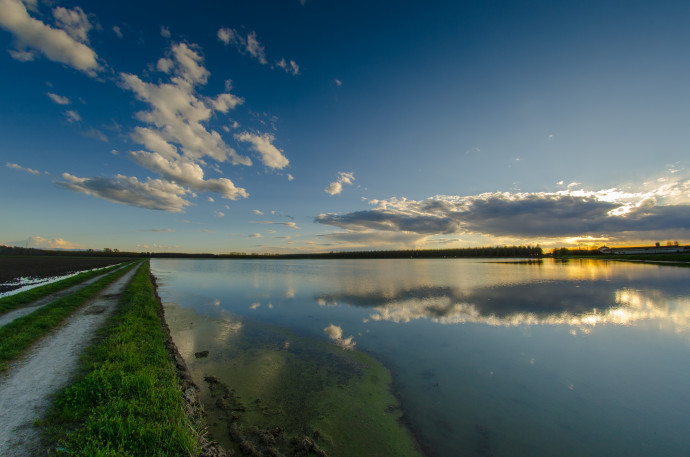
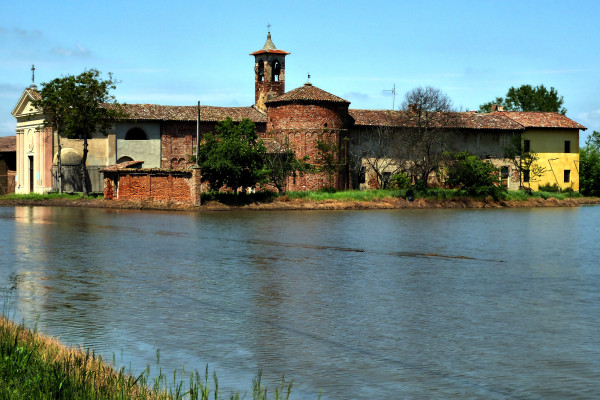
The heart of rice cultivation in the Pavia area lies in Lomellina and the Bassa Pavese, the vast plain in the northern part of the province, stretching between the Ticino and Po rivers. This fascinating landscape is dotted with historic villages, abbeys, farmsteads and wide agricultural expanses that, in springtime, turn into spectacular mirrors of water.
What today appears as a harmonious and natural landscape is in fact the result of centuries of human intervention. Originally, these lands were partly marshy and partly arid. It was the work of medieval monks, later feudal organisation, and above all the agronomic reforms introduced by the Sforza during the Renaissance, that transformed the area into one of the most advanced agricultural systems in Europe.
Canals, irrigation channels and farmsteads: a man-made landscape
To support rice cultivation, a complex system of irrigation canals, channels and locks was created, many of which are still in use today, allowing precise water management. At the same time, the characteristic cascine developed, first as fortified settlements and later as closed courtyard farmsteads, becoming a symbol of agriculture in the Po Valley.
Rice was introduced to Italy by the Arabs in the 8th century, reaching the Po Valley in the 15th century via Sicily. Historical documents record that in 1475 the Sforza family donated sacks of rice to the Dukes of Este, encouraging its cultivation in the Po Delta as well.
How rice is grown in the Pavia area
Rice cultivation follows a well-defined and fascinating agricultural cycle:
-
Spring: preparation of the soil through ploughing, refining and fertilisation.
-
Flooding of the fields through the network of irrigation canals.
-
Sowing, traditionally broadcast by hand; in recent years, dry sowing in buried rows using precision machinery has become increasingly common.
-
Weed control in early summer, using techniques and products that are ever more environmentally friendly.
-
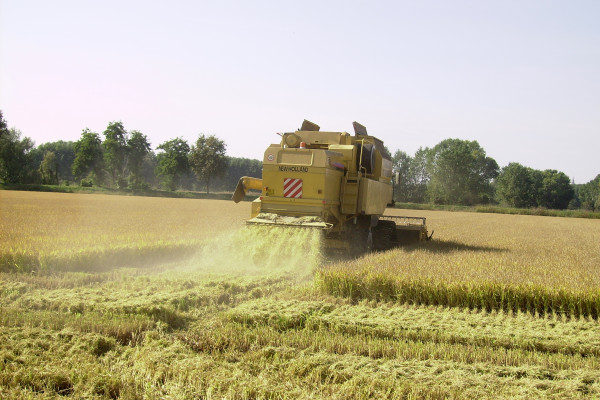
Harvesting between September and October with combine harvesters, followed by drying and processing of the rice.
Processing includes cleaning, husking (to obtain wholegrain rice) and whitening, which produces the white rice intended for consumption.
Rice varieties and farming enterprises
Around 1,700 rice farms operate in the Province of Pavia, preserving a centuries-old tradition while also embracing agricultural innovation. The varieties grown fall into four main commercial categories - round, long, medium and superfine - and include some of the most famous types used in Italian cuisine:
Carnaroli, Arborio, Vialone Nano, Baldo, Balilla, Sant’Andrea, Roma, Gladio, Loto and Selenio.
In recent years there has been a growing focus on quality, with increasing emphasis on premium varieties, particularly appreciated in high-end gastronomy.
Pavia and rice: a heritage to be discovered
Visiting the Province of Pavia means entering a unique agricultural landscape in Europe, where history, water, tradition and innovation have coexisted for centuries. A territory that tells the story of rice not only as an agricultural product, but also as a defining element of local identity, culture and landscape.
Attachments
Scarica la Guida: Buono a sapersi - capitolo Riso edito dalla CCIAA di Pavia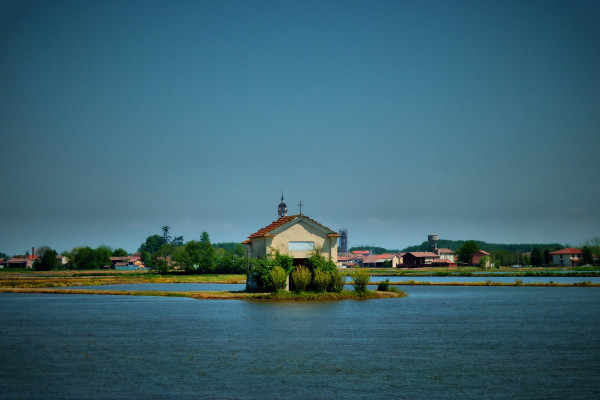
Best time to visit the rice fields of the Province of Pavia
The best period to visit the rice fields of the Province of Pavia depends on the type of experience you are looking for. From a tourism and landscape perspective, however, there are clearly recommended seasons.
Ideal period: late April – May
This is the most evocative and highly recommended time. During these weeks, the rice fields are flooded, transforming the landscape into vast mirrors of water that reflect the sky, historic farmsteads and rows of poplar trees. It is the most iconic season for photography, walking and cycling tours, especially in Lomellina and the Bassa Pavese. Temperatures are mild and spring light enhances the scenery.
Good alternative: June – early July
The rice plants are lush and intensely green. While the landscape is less dramatic than during the flooding phase, it is very appealing from a naturalistic point of view. This period is ideal for visitors interested in the countryside at the height of agricultural activity and in observing local wildlife.
Another interesting season: September – early October
This is the harvest season. The rice fields turn golden, and visitors can witness traditional and modern harvesting operations. It is a perfect time for those who want to understand the rice production cycle and combine their visit with local food and wine events.
Less recommended: winter
From November to March the landscape is more bare, as the rice fields are at rest. The area remains attractive for cultural visits—historic farmsteads, abbeys and villages—but it does not offer the classic image of the “land of rice”.
In summary
-
Best overall period: late April – May
-
For vibrant green landscapes: June
-
For agricultural traditions and harvest: September