- Art & Culture
Church of San Teodoro
History, frescoes and secrets of a medieval masterpiece in Pavia

In the ancient heart of Pavia, along the banks of the Ticino river, stands the Church of San Teodoro: one of the most fascinating and historically significant places of worship in the city. Built in the twelfth century, this church houses one of the most precious frescoes of the Lombard Renaissance — an extraordinary panoramic view of Pavia painted by Bernardino Lanzani in 1525, a true window into medieval Pavia. Discover the history, art and secrets of this unmissable church in the heart of the Province of Pavia.
The history of the Church of San Teodoro: from its medieval origins to the present day
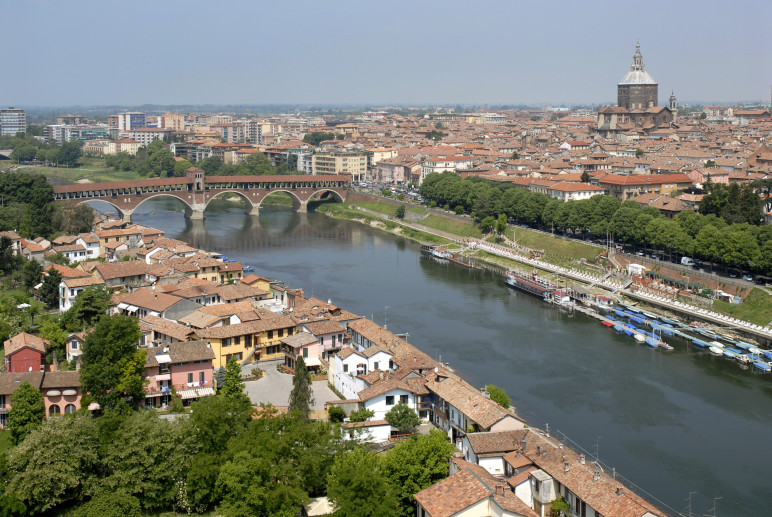
The Church of San Teodoro was built in the second half of the twelfth century, at a time when Pavia was a vibrant city bristling with medieval towers and animated by the river traffic of the Ticino. The choice of location was no coincidence: the church rose in the very neighbourhood inhabited by the fishermen, boatmen and merchants who brought life to the riverbanks, a hard-working community that needed a sacred space close to their daily lives.
The church was erected to enshrine the relics of Saint Theodore, an ancient bishop of Pavia and a revered figure in the local Christian tradition. Saint Theodore is the patron saint of fishermen, boatmen and merchants — professional categories that had for centuries made this stretch of the Ticino the beating heart of their economic activity. Devotion to this saint has remained alive through the ages, weaving itself into the history of the Pavese community.
Over the centuries the church underwent alterations and restorations, yet it has always preserved its vocation as a place of quiet reflection and historical memory. Today the Church of San Teodoro is one of the most visited monuments in Pavia, attracting tourists, art historians and lovers of medieval architecture from across Italy and beyond.
Bernardino Lanzani's fresco of 1525: medieval Pavia immortalised in a painting
The true jewel of the Church of San Teodoro is undoubtedly the celebrated fresco painted by Bernardino Lanzani in 1525. It stands as one of the most precious and detailed iconographic records of Renaissance Pavia, a visual document of extraordinary historical and artistic value that continues to captivate scholars and visitors from around the world.
A panoramic view of Pavia still "bristling with towers"
The fresco depicts a panoramic view of Pavia with a precision and level of detail remarkable for the period. The composition shows the city still dominated by dozens of tall medieval towers, which gave Pavia an urban skyline comparable to the one still admired today in San Gimignano in Tuscany. At the height of its medieval splendour, Pavia boasted more than one hundred towers, each a symbol of the power and prestige of the city's noble families.
The monuments recognisable in the fresco
In Lanzani's panorama, several of the city's most iconic monuments can be easily identified, many of which are still standing and open to visitors today.
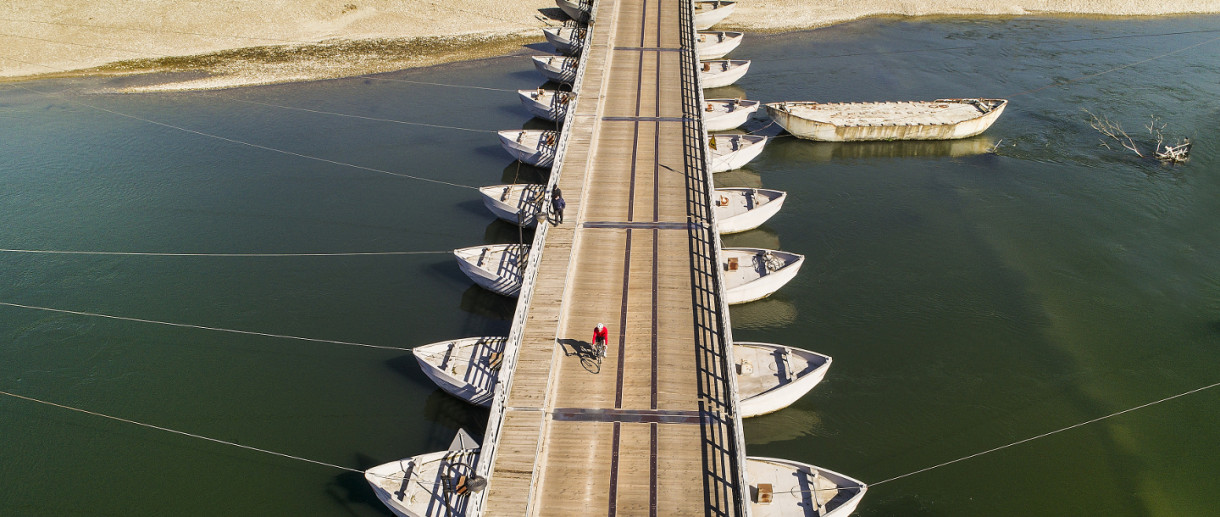
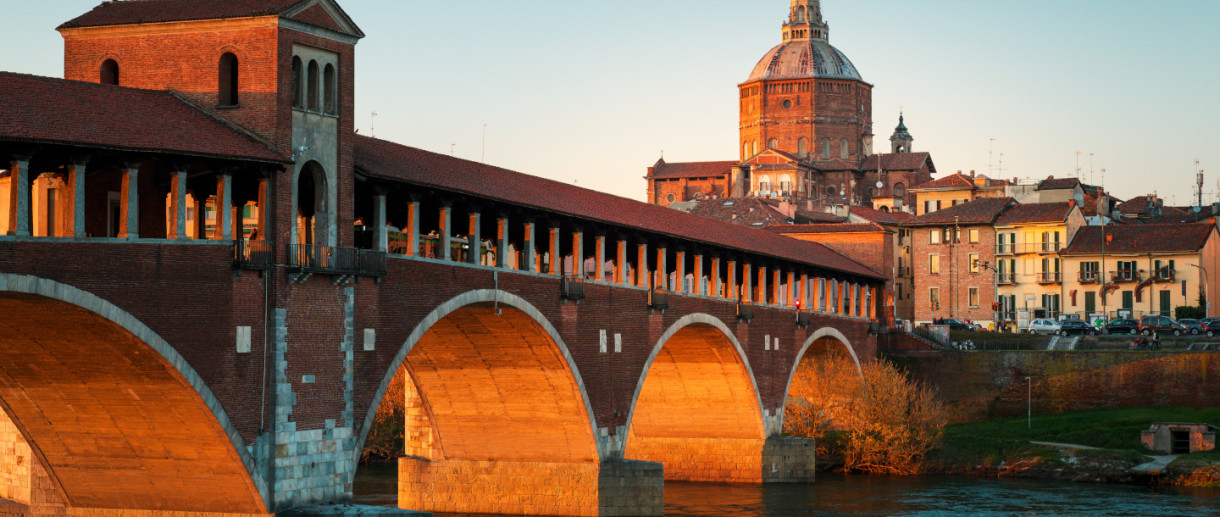
The Visconti Castle of Pavia stands prominently in the view, recognisable by its characteristic square plan with four corner towers, commissioned by Galeazzo II Visconti in the fourteenth century and later enlarged by Gian Galeazzo. The Covered Bridge over the Ticino is another easily identifiable feature: the historic bridge that linked Pavia to the Lombard bank of the river appears in the fresco in its original medieval form, predating the destructions and reconstructions that would affect it in subsequent centuries.
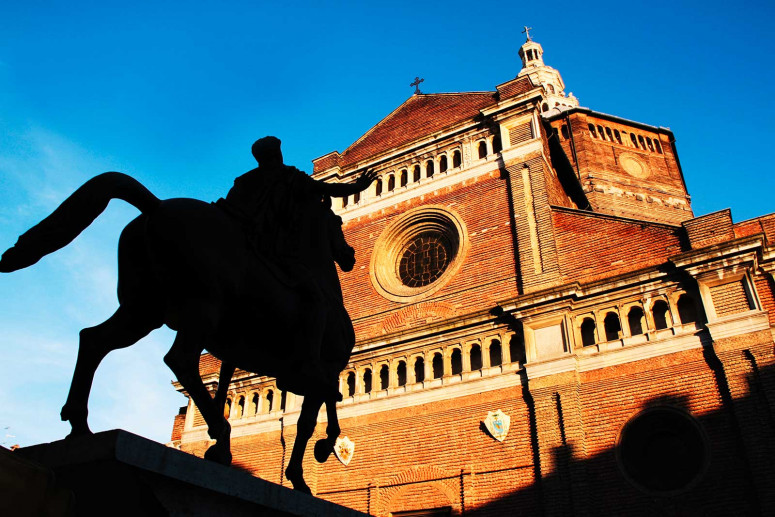
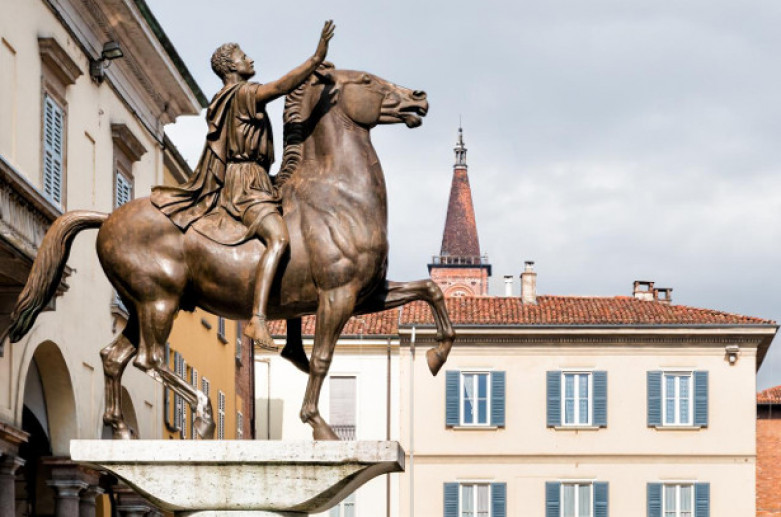
The fresco also shows the Regisole, the celebrated gilded equestrian statue that for centuries was the defining symbol of Pavia, displayed in Piazza Grande in front of the Cathedral, before being destroyed during the revolutionary upheaval of 1796. Its presence in Lanzani's painting is today one of the most important iconographic records of this lost masterpiece. Completing the panorama are numerous Pavese churches, many of which still exist and can be visited, enabling visitors to trace a map of the Renaissance city and understand the urban evolution of Pavia across the centuries.
Bernardino Lanzani: the painter of Renaissance Pavia
Bernardino Lanzani was a Lombard painter active between the late fifteenth and early sixteenth centuries, whose work is closely tied to the city of Pavia and its surrounding territory. Schooled in the Lombard pictorial tradition, Lanzani combined the documentary precision typical of the Renaissance urban view with a refined artistic sensibility, producing a work of extraordinary quality that retains its full communicative power to this day.
The architecture of the Church of San Teodoro: Romanesque character and transformation over time
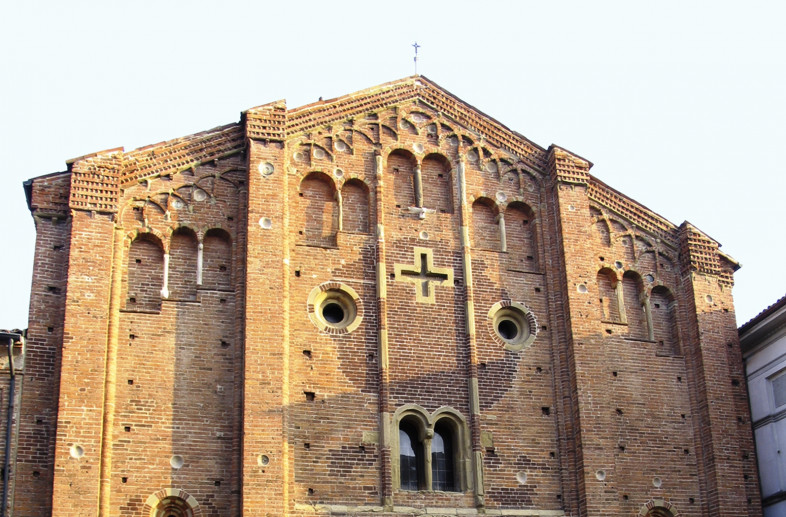
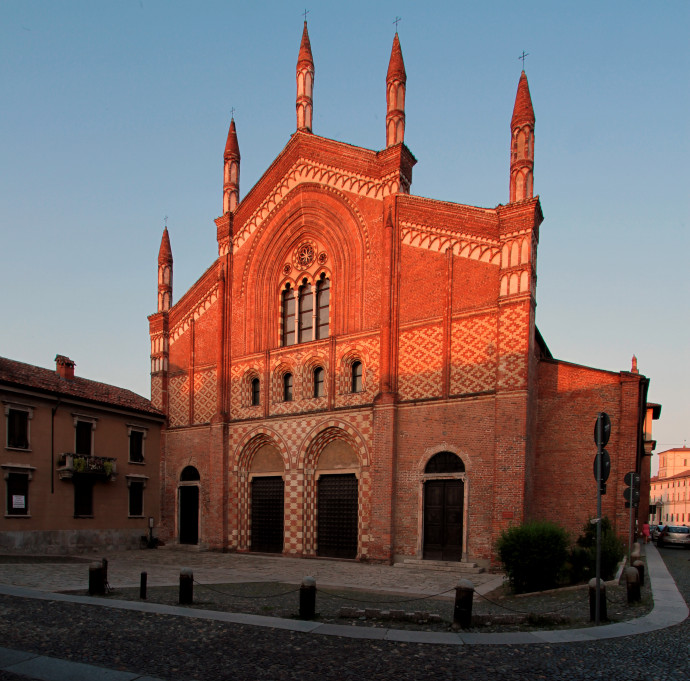
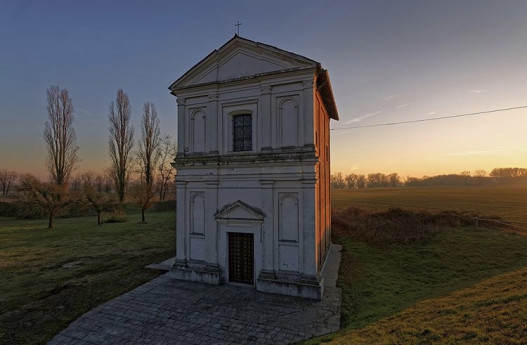
The building displays the hallmarks of twelfth-century Lombard Romanesque architecture: sober, essential forms, a basilica plan, and the use of stone and brick characteristic of many Pavese churches of this period. The facade, restrained and composed, integrates harmoniously into the urban fabric of the historic quarter surrounding it — a neighbourhood that still retains much of its medieval character today.
The interior of the church is divided into naves that shelter, alongside Lanzani's famous fresco, further works of art and devotional objects linked to the cult of Saint Theodore. The quiet, intimate atmosphere of the interior invites contemplation and reflection, making a visit a genuine and spiritually meaningful experience.
Saint Theodore, patron of fishermen and boatmen: the cult and popular devotion
Saint Theodore served as bishop of Pavia in late antiquity, and his figure is deeply rooted in the religious and cultural memory of the city. His protection was invoked above all by those whose lives were bound to the River Ticino: the fishermen who drew their sustenance from the river's waters, the boatmen who ferried goods and people from one bank to the other, and the merchants who relied on the waterways for the transport of their wares.
Devotion to Saint Theodore was therefore, from the very beginning, a popular devotion — tied to daily labour and the dangers of the river — and the church that enshrines his relics naturally became a gathering place for the community living along the banks of the Ticino. This devotional tradition has remained alive through the centuries to the present day, forming an important element of identity for the Pavese community.
Pavia and its medieval towers: a heritage waiting to be discovered
Lanzani's fresco in the Church of San Teodoro is also a remarkable opportunity to discover the fascination of medieval Pavia and its celebrated towers. In the Middle Ages, Pavia was nicknamed the "city of a hundred towers": every noble family in the city built its own tower as a symbol of power, wealth and prestige, creating a unique and visually spectacular urban landscape.
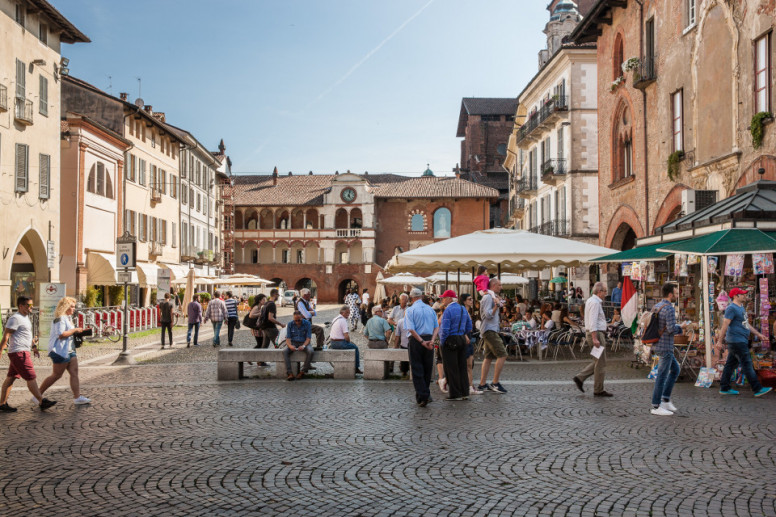
Of the many original medieval towers, several survive today, including the three towers of the Broletto in Piazza della Vittoria, which still bear witness to the grandeur of the city's ancient skyline. Lanzani's panoramic view allows us to imagine with extraordinary vividness how Pavia must have appeared at the height of its medieval splendour, and represents an invaluable document for the history of Italian urban planning.
Visiting the Church of San Teodoro in Pavia: practical information for tourists
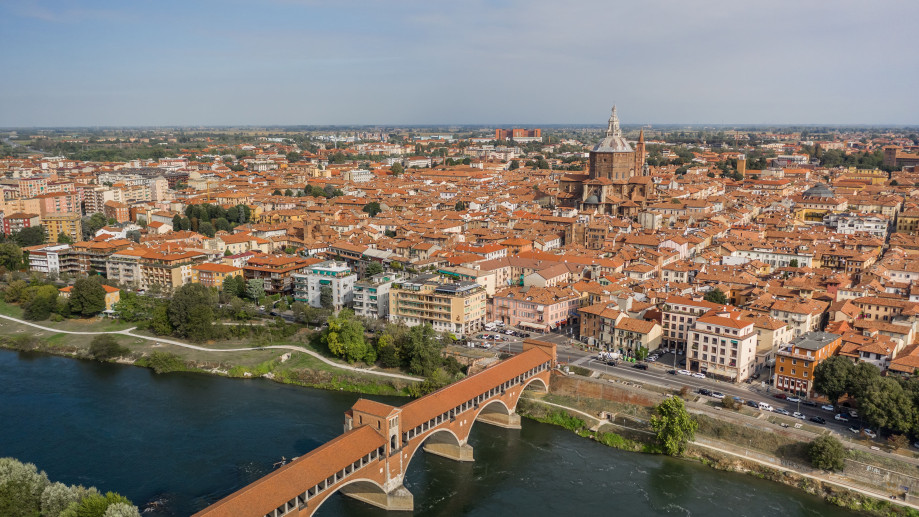
The Church of San Teodoro is located in the historic centre of Pavia, close to the Ticino and easily reachable on foot from the Ponte Coperto and Piazza della Vittoria. A visit to the church fits naturally into a broader itinerary exploring the city's historical and artistic heritage, which includes the Visconti Castle, the Cathedral, the Basilica of San Michele Maggiore and the Certosa di Pavia.
For an ideal visit, allow at least half an hour to appreciate Lanzani's fresco in all its detail at a leisurely pace. It is advisable to check opening hours in advance, as these may vary depending on the time of year and liturgical celebrations. Admission to the church, as with most Pavese churches, is free of charge.
A visit to the Church of San Teodoro pairs perfectly with a stroll along the banks of the Ticino and a stop at the Ponte Coperto just a short walk away, or can be woven into a broader tour of the Romanesque churches of Pavia, another of the city's outstanding cultural highlights.
The Church of San Teodoro in the tourist itineraries of the Province of Pavia
The Church of San Teodoro is an essential landmark for anyone wishing to explore Pavia and its province.
The Province of Pavia offers a cultural and natural heritage of extraordinary richness, stretching from the plains of the Po and Ticino rivers to the hills of the Oltrepo Pavese, from Cistercian abbeys to noble villas, from medieval villages to nature reserves. The Church of San Teodoro stands as one of the most authentic symbols of this territory: a place where history, art and popular devotion merge into a unique and unforgettable experience.
Pavia and Saint Theodore: a journey through the history of medieval Italy
Visiting the Church of San Teodoro means embarking on a journey through the centuries of Italian history, from Lombard and medieval Pavia to the Lombard Renaissance, through popular devotion and the deep bond between the city and its river. Lanzani's fresco, with its panorama of a Pavia bristling with towers, is far more than a work of art: it is a window onto the past, a visual document that brings history to life in an immediate and deeply moving way.
Other links
Facebook