- Villages
Frascarolo
The Lombard village on the Piedmont border, between medieval history and rice field landscapes


Discovering Frascarolo means immersing yourself in one of the most authentic corners of the Pavese Lomellina, a flat territory between the Po, Ticino and Sesia rivers that, due to its extraordinary concentration of castles and rural architecture, is often called the little Loire of Lombardy. Located in the southernmost part of Lomellina, a short distance from the left bank of the Po and close to the Piedmont border, this small municipality of just over a thousand inhabitants holds a millenary history rooted in the early Middle Ages, intertwined with the events of the greatest dynasties of the Po Valley.
Frascarolo's geographical position has shaped its destiny throughout the centuries. Facing the lands of Monferrato and opposite the fortress of Valenza, the village was always on the front line during the territorial disputes that shook north-central Italy from the Middle Ages to the modern era. This strategic location made it the scene of sieges, raids and troop movements, leaving indelible marks on its history and architecture.
The historical origins of Frascarolo date back to the County of Lomello, to which the village belonged in the early Middle Ages. With the imperial diploma of 1164, Frederick I subjected it to the dominion of Pavia, and by 1250 it already appeared as Frascarolum in the list of Pavese lands. Its history soon became intertwined with that of the great Lombard noble families: in 1441 Filippo Maria Visconti granted the fief to Andrea Birago of Milan, beginning a long series of changes of ownership involving the Varesini, the Bellisomi and later the Savoy, when in 1713 the entire Lomellina passed under Piedmontese rule.
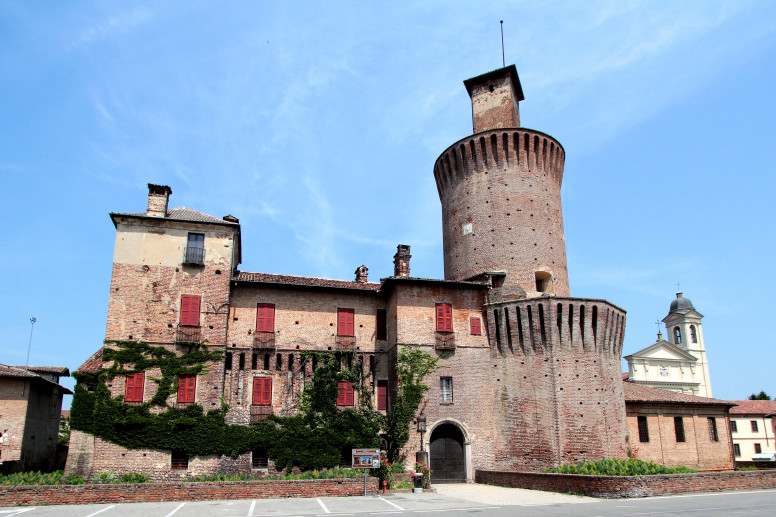
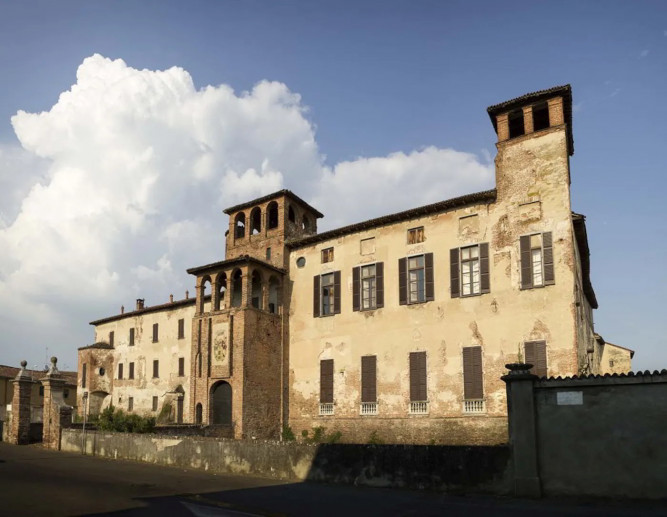
The Visconti-Sforza castle is the monumental heart of Frascarolo and one of the unmissable points of interest for anyone visiting the Pavese Lomellina. Its history is documented from a parchment of 1409 preserved at the Biblioteca Trivulziana in Milan, which mentions it as the property of the noble Beretta family. In the years 1412 to 1415 the village and the castle were caught up in the conflicts between the Beccaria and Filippo Maria Visconti, which reduced it to ruin. Reconstruction was undertaken by the local noble families Beretta, Robba and Chiroli on the basis of an agreement of 1495 and the ducal patent granted by Ludovico il Moro in 1497, also thanks to the intercession of Isabella d'Este, Marchioness of Mantua. Work was completed in the early sixteenth century, as attested by a plaque on the castle façade bearing the date 1512.
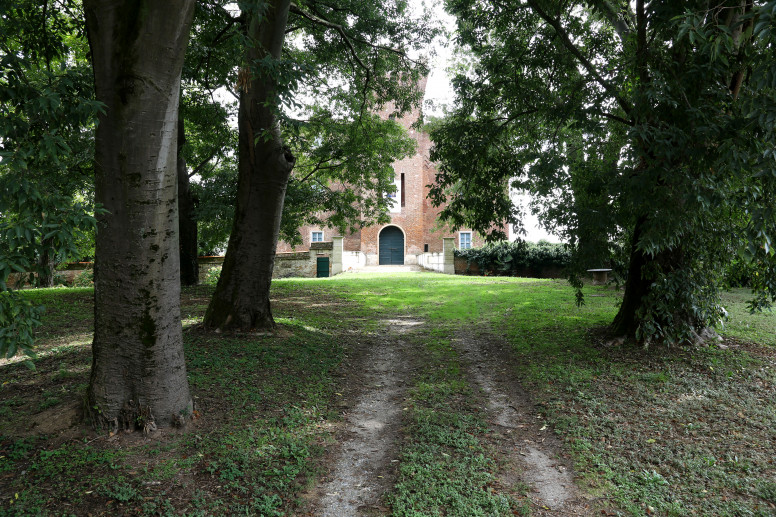
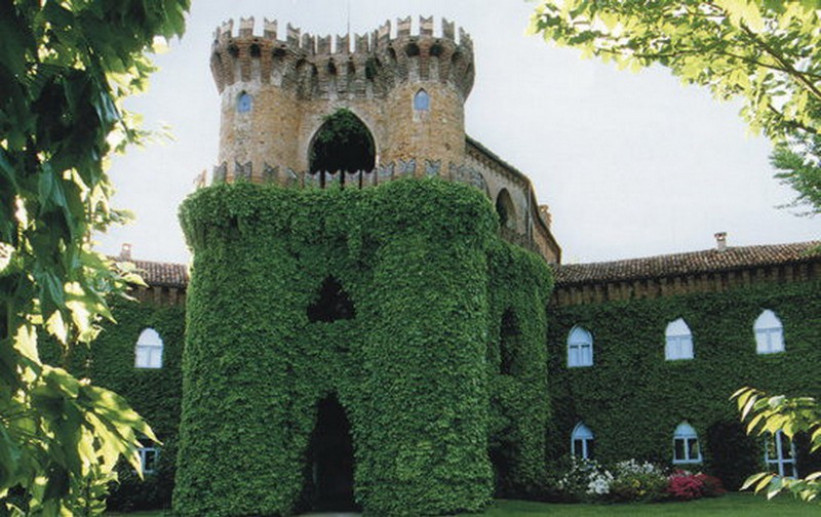
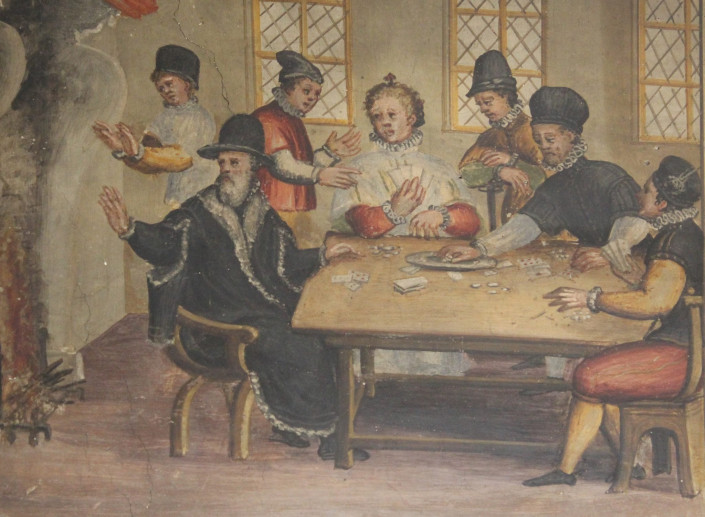
The structure that visitors can admire today has a quadrilateral plan with a moat all around and cylindrical towers projecting at the four corners. The entrance is set in the centre of the west face, surmounted by a massive tower that rises one storey above the height of the curtain wall. A masonry bridge crosses the moat, which was transformed into a garden as early as the 1820s, and replaces the old drawbridge, whose bolt sockets are still partially visible. The masonry clearly shows the nineteenth-century renovations that affected the entire upper storey, where the towers reveal the raising visible in their upper third. In 1882 the castle was transformed from a military fortification into an elegant residence in keeping with the neo-Gothic and Romantic taste fashionable at the time, with a series of loggias, small balconies and windows, some of which were frescoed in trompe-l'oeil with representations of frames and curtains, a typical element of nineteenth-century style. The property remained in the hands of the Vochieri family until 1978. In the early twentieth century the castle was declared a national monument.
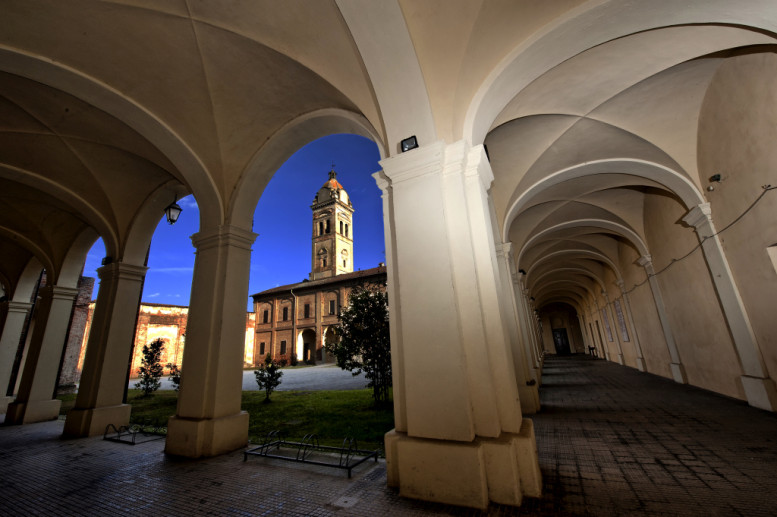
Today the castle is home to the Museo del Contadino, housed within a restored former rural complex that includes ancient stables, wide porticoes and an Italian garden surrounded by a vast park. The museum, part of the Ecomuseo del Paesaggio Lomellino circuit, is organised into three sections dedicated respectively to the home, traditional crafts and the land, with around eight hundred objects that tell the story of Lomellina agricultural life from the nineteenth century to the 1960s. Farm carts, carriages, threshing machines and mills bring back the atmosphere of a vanished rural world. The museum is open to the public on the first Saturday of each month from 10:00 to 12:00, while school groups can visit by appointment by writing to remo.danovi@museodelcontadino.it.
Beyond the castle, Frascarolo offers other monuments well worth a visit. The neoclassical parish church dedicated to the Blessed Virgin Mary of the Assumption and Saint Vitale the Martyr was built in 1841 and opened for worship in 1852; inside it holds fine frescoes by the painters Giovanni Valtorta and Luigi Morgari, as well as a Crucifixion on canvas by Francesco Sampietro dated 1852. No less evocative is the ancient church of Santa Maria Maggiore Castri Veteris, cited as early as 1322 in documents preserved in the Vatican Secret Archives, one of the oldest religious presences in the territory. Also worth seeing is the Sanctuary of the Blessed Virgin of the Romito, which houses a Renaissance fresco from the school of the painter Gaudenzio Ferrari.
The landscape surrounding Frascarolo is the unmistakable one of the rice-growing Lomellina. The rice fields stretch as far as the eye can see and change appearance with the seasons: in spring the flooded paddies become great mirrors of water reflecting the sky and the profiles of medieval towers, creating a unique visual spectacle, a true sea of squares. With summer the green of the young rice plants takes over, before giving way to the golden yellow of the autumn harvest. In this habitat rich in water and wetlands, herons, egrets, black-winged stilts and mallards find shelter, making the area attractive for birdwatching and nature photography enthusiasts as well.
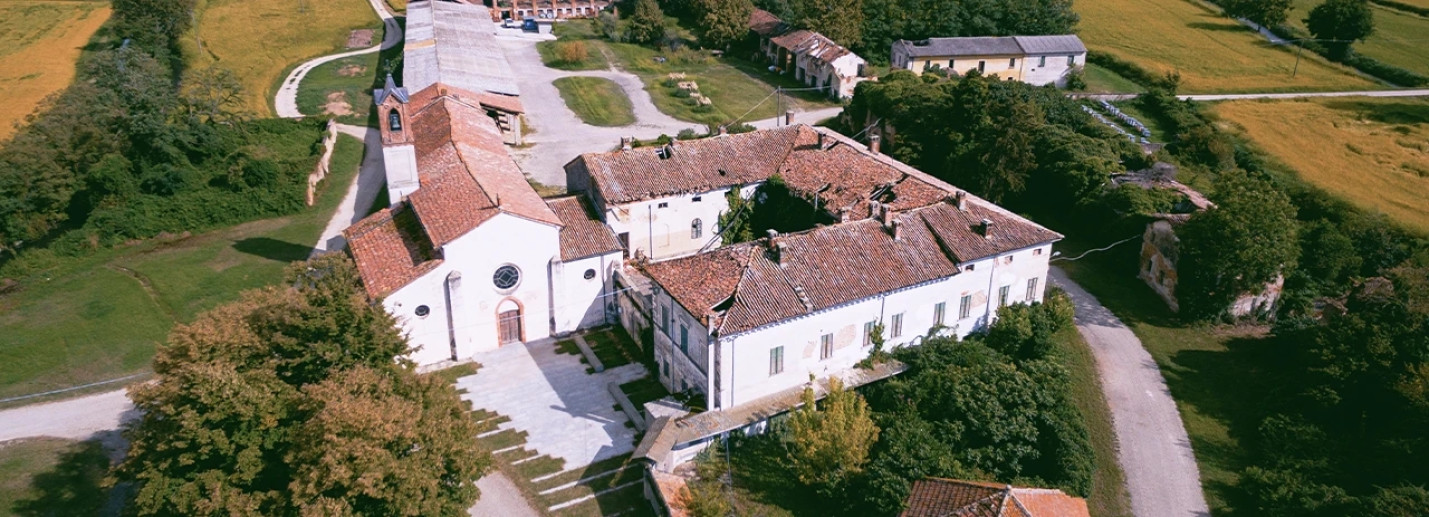
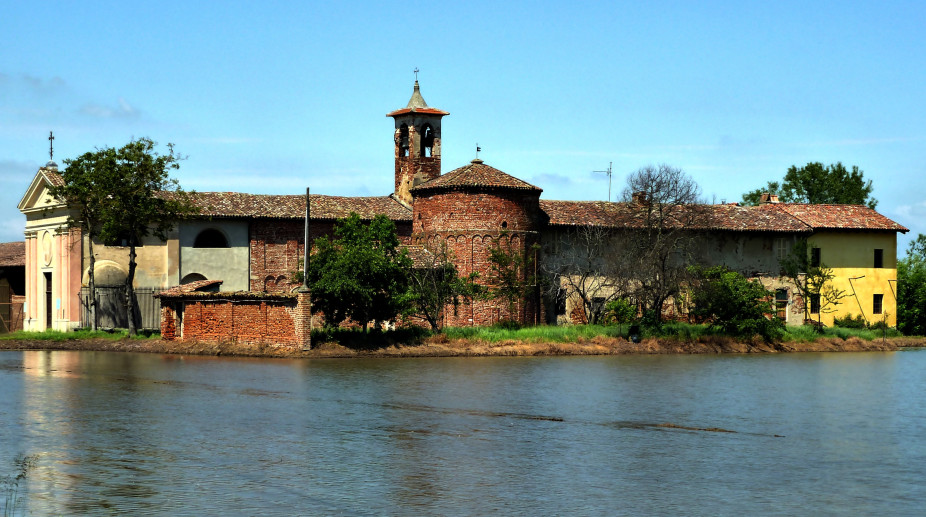
Just outside the village stands the Abbey of Acqualunga, an ancient Cistercian monastery founded in 1204, which further enriches the cultural offer of this corner of Lomellina. The village is included in the itineraries promoted by the Ecomuseo del Paesaggio Lomellino and represents a significant stop on the cycle tourism routes that cross the Pavese plain between castles, abbeys and farmhouses.
Frascarolo is easily reached by car and lends itself to exploration on foot or by bicycle, fitting perfectly into a broader itinerary through Lomellina. Those who visit this small village take home not only the memory of a fascinating, layered medieval history, but also the rare feeling of an authentically unspoilt landscape, where the Po Valley countryside and castle architecture dialogue in an ancient and precious balance.