- Villages
Lomello
The History of Lomello: From Roman Origins to the Lombard Era


Roman Origins and the Name of the Town
The name Lomello derives from the Latin Laumellum or Laumellae, a toponym already recorded in Roman times. The settlement stood along important communication routes that crossed the Po Valley and gradually assumed a strategic role in the control of the surrounding territory.
Lomello as a Lombard Residence (6th–7th Century)
Between the 6th and 7th centuries AD, Lomello became an occasional residence of the first Lombard kings, emerging as one of the most important centers of the kingdom. Its favorable geographical position in the middle of the Lomellina and its long-established settlement tradition made it an ideal stop for the itinerant court of Lombard rulers.
During this period, the foundations of the religious complex that still forms the historic and monumental heart of the town were laid: the Collegiata di Santa Maria Maggiore and the Baptistery of San Giovanni ad Fontes, built in the heart of the territory controlled by the Lombard dynasty.
The Counts of Lomello and the Imperial Period
With the rise of Carolingian and later Ottonian imperial rule, Lomello did not lose its prestige. On the contrary, the Counts of Lomello—one of the most influential noble families in the region—began to govern the surrounding territory, extending their authority across a large area of the Po Valley.
The comital title granted them civil, military, and judicial powers, strengthening Lomello’s role as an administrative and political center of the Lomellina. This continuity of power between the Lombard and imperial eras is documented not only in historical records but also in the solidity and richness of the architectural heritage that survives today.
The Monumental Complex of Santa Maria Maggiore and the Baptistery of San Giovanni ad Fontes
The complex of Santa Maria Maggiore and the Baptistery of San Giovanni ad Fontes is among the most important monuments of early medieval architecture in Italy.
The Collegiata di Santa Maria Maggiore
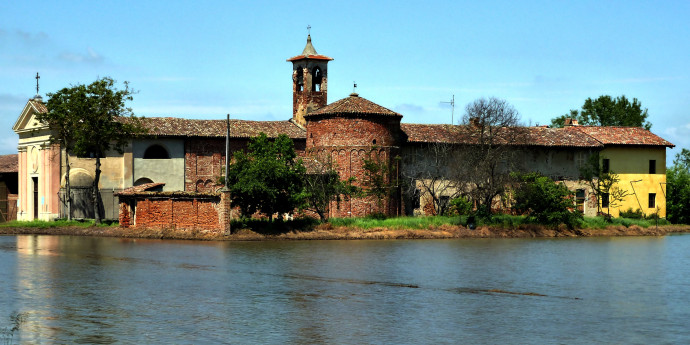
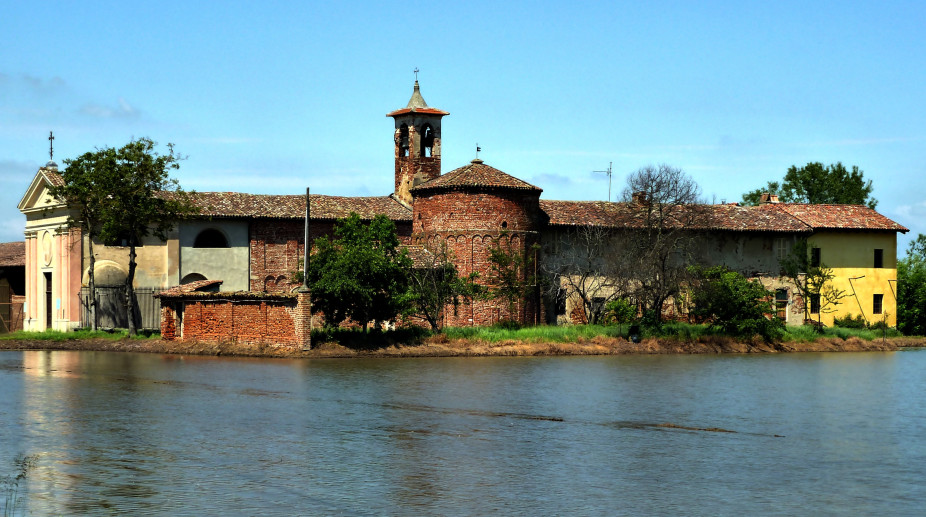
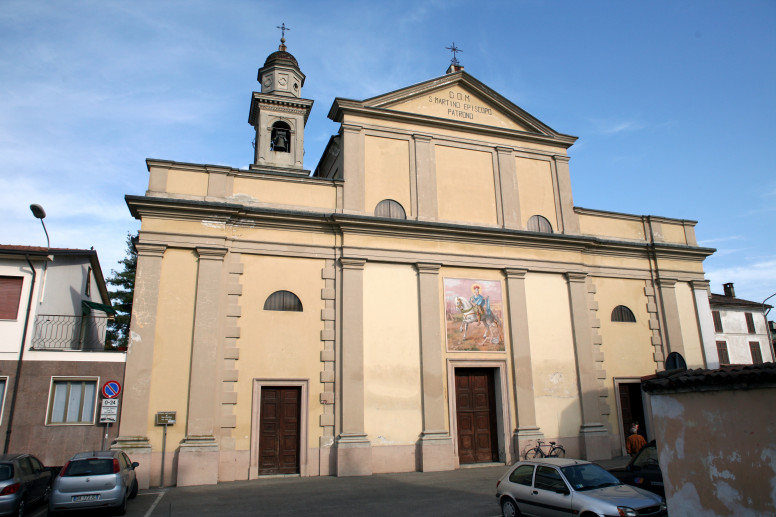
The Collegiata di Santa Maria Maggiore is one of the oldest and best-preserved Romanesque churches in Lombardy. Its construction dates back to the 11th century, although its foundations and some earlier structures reflect the architectural traditions of the Lombard period.
The building features a basilica plan with three naves and a sober, austere design typical of Romanesque architecture in the Po Valley.
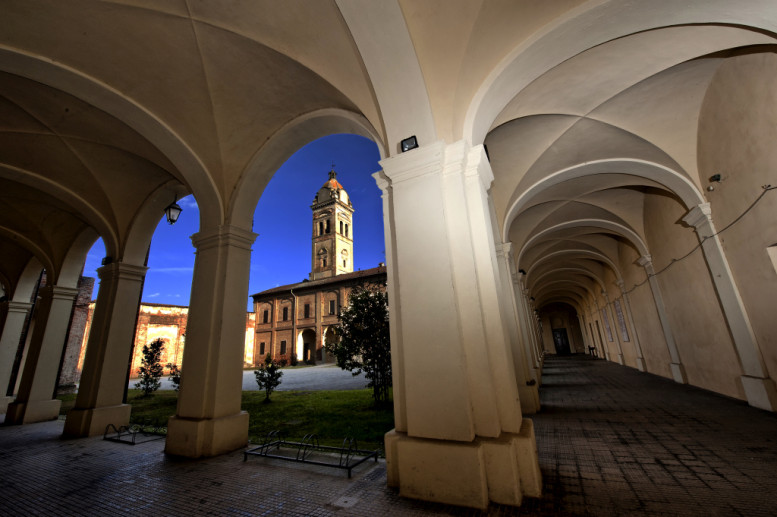
The exposed brick façade and the Romanesque bell tower dominate the small historic center of Lomello, making the church immediately recognizable and highly photogenic—an important element for digital visibility and the tourist promotion of the village.
Inside, the church preserves decorative and structural elements of great historical and artistic interest, including capitals, columns, and frescoes that narrate centuries of religious devotion and local history.
The Baptistery of San Giovanni ad Fontes
The Baptistery of San Giovanni ad Fontes is the true jewel of the complex. It is a centrally planned structure—a typical form of early Christian and early medieval baptisteries—of exceptional rarity in the Italian architectural landscape.
The Baptismal Font: A Treasure from the 7th Century
At the center of the baptistery stands the ancient hexagonal baptismal font, dating back to the 7th century. This extraordinary artifact represents one of the rarest and best-preserved examples of immersion baptism fonts from early medieval Italy.
The hexagonal basin is not only an archaeological treasure but also an architectural and liturgical document that speaks directly about the religious practices of the Lombards after their conversion to Christianity. In early Christian communities, baptism by immersion required structures of this type, which today are extremely rare.
The walls of the baptistery also preserve fragments of 7th-century painted decorations, part of a decorative cycle that represents one of the oldest testimonies of medieval painting in Lombardy. The pigments and techniques reveal the influence of artistic workshops active during the Lombard period and reflect the encounter between late Roman traditions and new Germanic expressive languages.
Why Visit Lomello: Five Unmissable Reasons
Authentic Lombard history
One of the few places where it is still possible to experience the atmosphere of Lombard Italy without the mediation of large museums or reconstructions.
Exceptional early medieval architecture
The baptistery and the collegiate church form one of the most complete and best-preserved early medieval religious complexes in Italy.
The 7th-century hexagonal baptismal font
A unique feature in the Italian architectural landscape, of extraordinary historical and liturgical significance.
The landscape of the Lomellina
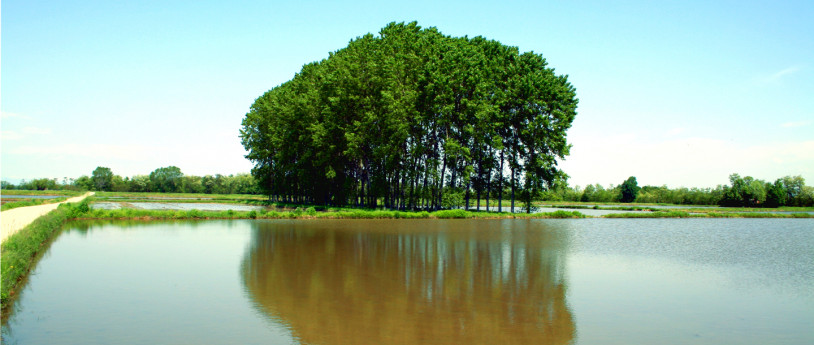
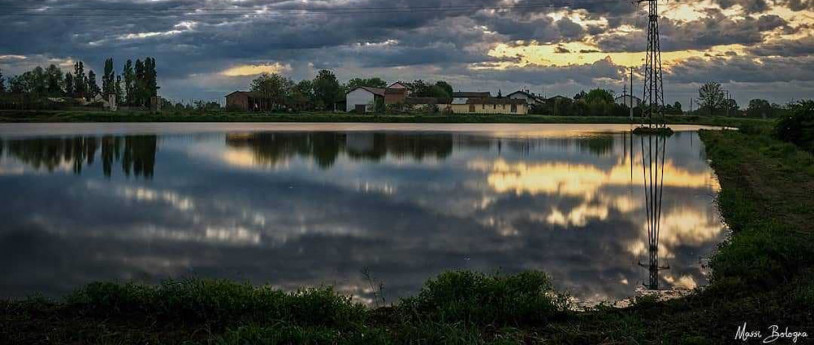
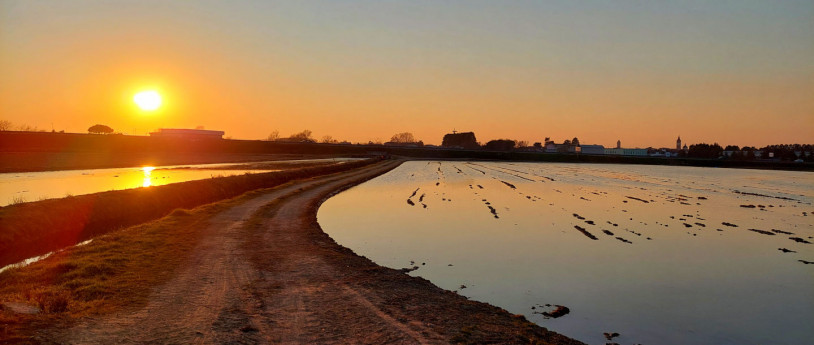
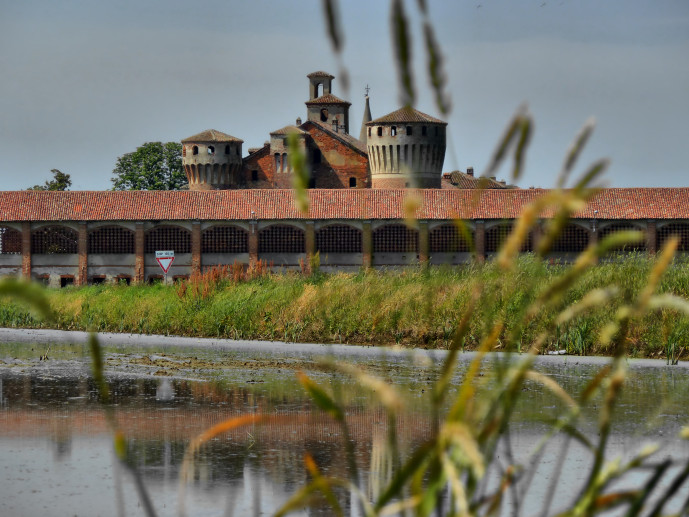
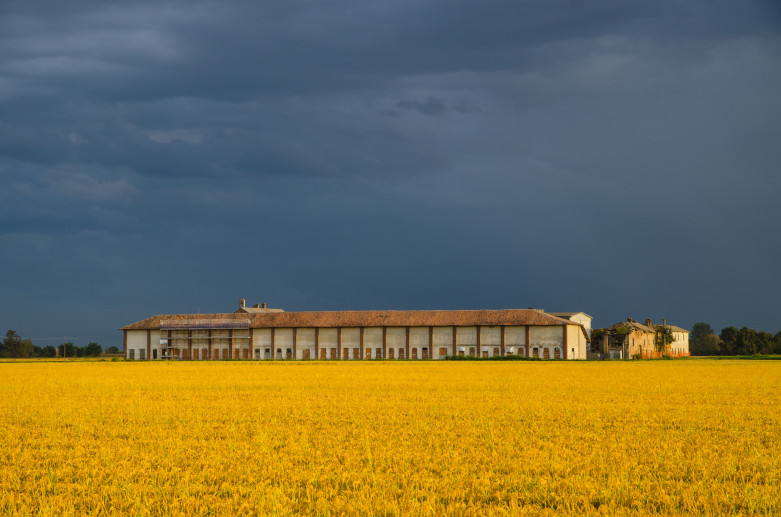
Rice fields, historic farmsteads, and an endless plain create an authentic landscape far removed from mass tourism.
Slow and sustainable tourism
Lomello is an ideal destination for travelers seeking deep cultural experiences in an authentic small town.
Lomello in the Context of the Lombard Kingdom in Italy
The Lombards invaded the Italian peninsula in 568 AD under the leadership of King Alboin, establishing their kingdom with its capital in Pavia. The Lomellina—fertile and strategically positioned between the Ticino, Po, and Sesia rivers—became one of the central areas of Lombard power in northern Italy.
Within this context, Lomello likely functioned as a residence of the Lombard court, possibly used as a seasonal seat or a reference point during military campaigns and administrative activities. The presence of such a sophisticated baptistery complex demonstrates the high cultural level and economic resources available to the settlement during this period.
Today the Lombard heritage in Italy is recognized by UNESCO through the serial site “Longobards in Italy. Places of Power (568–774 AD)”. Although Lomello is not officially included in the UNESCO sites, its architectural heritage is closely connected to this crucial chapter of Italian history.
Visiting Lomello: Practical Information
How to Get There
By car
Lomello is located about 40 km from Pavia and 60 km from Milan. It can be easily reached via the A26 motorway (Casale Monferrato Sud exit) or via the SS494 state road.
By train
The nearest railway station is Mortara, with connections from Milan Porta Genova and Alessandria. From Mortara, Lomello can be reached by car or local transport services.
Best Time to Visit
The best time to visit Lomello is spring (April–June) and autumn (September–October), when temperatures are mild and the Lomellina countryside displays its most evocative colors.
In summer the rice fields are lush and green, while in autumn the rice harvest transforms the plain into a unique and striking landscape.
What to See Nearby
A visit to Lomello can easily be combined with an itinerary exploring the historic Lomellina:
-
Mortara, known for the Basilica of San Lorenzo
-
Vigevano, famous for its magnificent Piazza Ducale
-
Certosa di Pavia, one of the masterpieces of Italian Renaissance architecture
Frequently Asked Questions about Lomello
Why is Lomello historically important?
Lomello served as an occasional residence of the first Lombard kings between the 6th and 7th centuries AD and hosts an exceptional early medieval architectural complex consisting of the Collegiata di Santa Maria Maggiore and the Baptistery of San Giovanni ad Fontes with its rare 7th-century hexagonal baptismal font.
What can visitors see in Lomello?
The main attraction is the monumental complex of the Collegiata di Santa Maria Maggiore and the Baptistery of San Giovanni ad Fontes. The baptistery preserves the ancient hexagonal baptismal basin and fragments of 7th-century painted decorations.
Is Lomello a UNESCO site?
Lomello is not directly included in the UNESCO site “Longobards in Italy”, but its architectural heritage is closely connected to Lombard culture and is considered of outstanding historical and artistic value.
How long does it take to visit Lomello?
A visit to the monumental complex usually takes 1–2 hours. If you wish to explore the village and the surrounding countryside, half a day is ideal. Lomello can easily be included in a one-day itinerary through the Lomellina.
Lomello is one of those places that surprises visitors with the density of its history and the quality of its artistic heritage, hidden within a small village of the Po Valley. Visiting it means taking an authentic journey into the Italian Middle Ages, a time when this land stood at the center of Lombard power and religious life in northern Italy.
Lomello awaits curious travelers willing to go beyond the most famous destinations: an early medieval treasure in the heart of the Lomellina.
Whether you are passionate about medieval history, Romanesque architecture, authentic landscapes, or simply searching for cultural experiences away from mass tourism, Lomello offers something truly special—a place where the silence of the plain intertwines with the whispers of centuries of history.
Other links
FacebookPortami a Lomello
Visitare Lomello 2026: domande frequenti