- Villages
Gambolò
From the medieval fief of the Beccaria family to the residence of Ludovico il Moro: a journey through millennia of Lomellina history

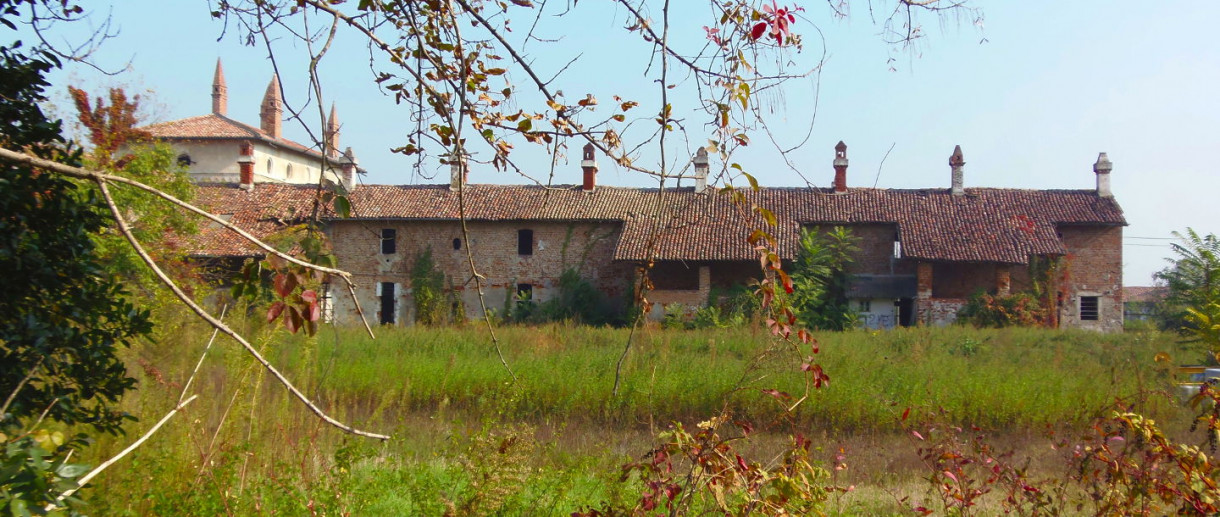
A castle has been documented in Gambolò since the eleventh century, but it was from the early fourteenth century that the village entered the sphere of influence of the Beccaria family, one of the most powerful noble houses in the Pavia political scene. The Beccarias held private lordship over the territory — rights not derived from ducal concessions — until 1412, when Antonio Beccaria and his brothers were officially enfeoffed by Filippo Maria Visconti with the village and granted the title of Counts of Gambolò.
In 1466, the investiture was renewed in favour of Agostino Beccaria, Antonio's son, who frequently resided in the castle. When he died in 1475 without direct heirs, the castle was named in his will as a bequest to the Pavia hospital of San Matteo. Yet as early as 1481, Ludovico il Moro — who had just assumed power as regent of the Duchy of Milan — managed to secure private dominion over Gambolò, taking up residence in the Beccaria palace within the castle and staying there with considerable regularity.
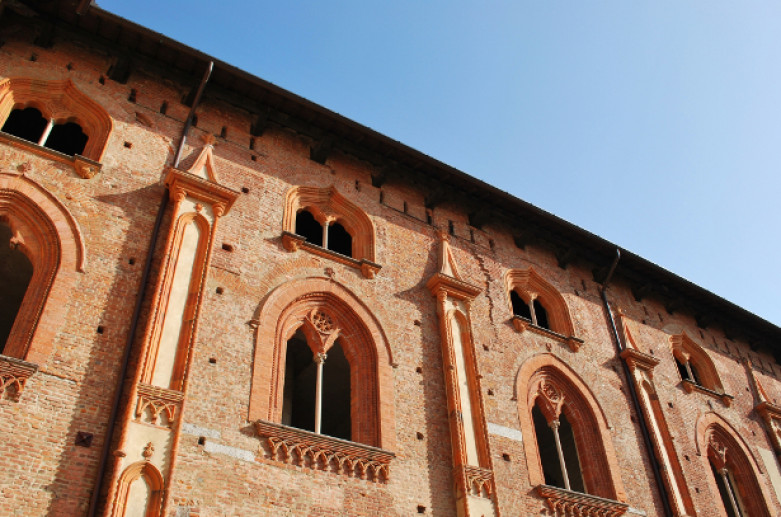
After the fall of Ludovico il Moro, the castle and its fief passed to Gian Giacomo Trivulzio, then in 1513 to the Bishop of Sion, Matteo Schiner, before Agostino Litta succeeded in acquiring the fief in 1573. He launched an ambitious programme of architectural renovation to transform the medieval stronghold into a noble villa. It is from this period that the complex took on the appearance it largely retains today, earning the name Litta-Beccaria Castle.
The Architecture: the Baroque Gateway, the Drawbridge and the Manica Lunga
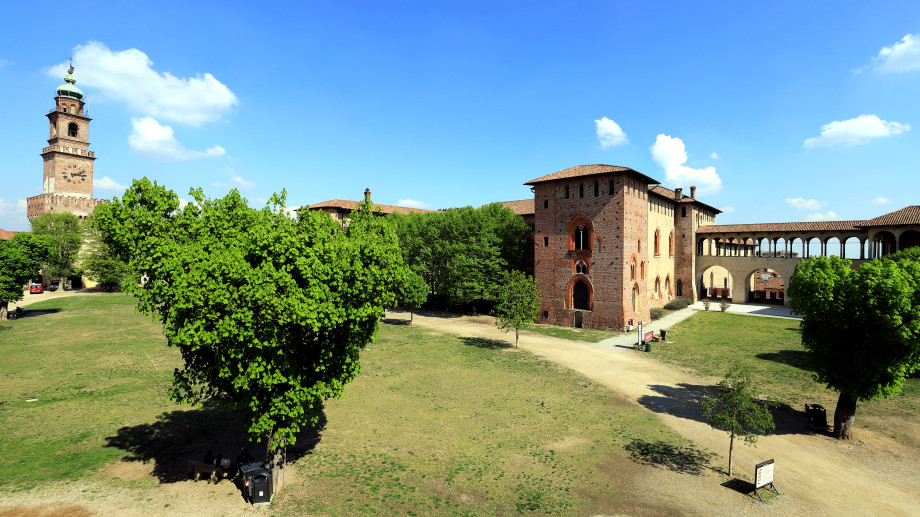
Access to the castle is through a gateway remodelled in the Baroque period, in which the slots for the bolts of the original drawbridge can still be clearly identified — architectural details that speak of the stronghold's original defensive function, when a mobile bridge separated the outside world from the inner courtyard.
In the fifteenth century, the complex presented itself as a large turreted manor, protected at the entrance by a tower described in contemporary documents as 'magna' (great). Within the enclosure stood the chapel, the podestà's house with its prison cells, the communal oven, the well and the magistrate's house.
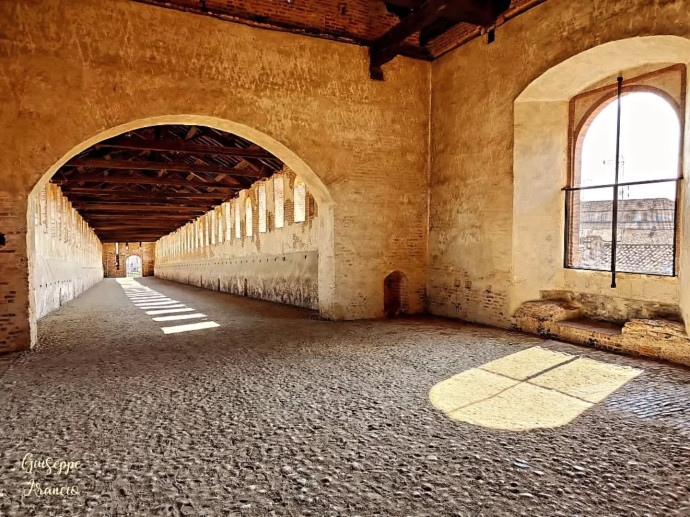
Among the most remarkable architectural features is the so-called Manica Lunga, or Loggia delle Dame (Ladies' Gallery): a long western wing with an arcaded ground floor supported on paired columns and an upper storey occupied by an enclosed gallery, grafted onto the southern side of the main building and terminating in the round Belvedere tower. It is in this evocative space that the Lomellino Archaeological Museum is now housed.
The Lomellino Archaeological Museum: 1,200 Artefacts, Four Rooms, Millennia of History
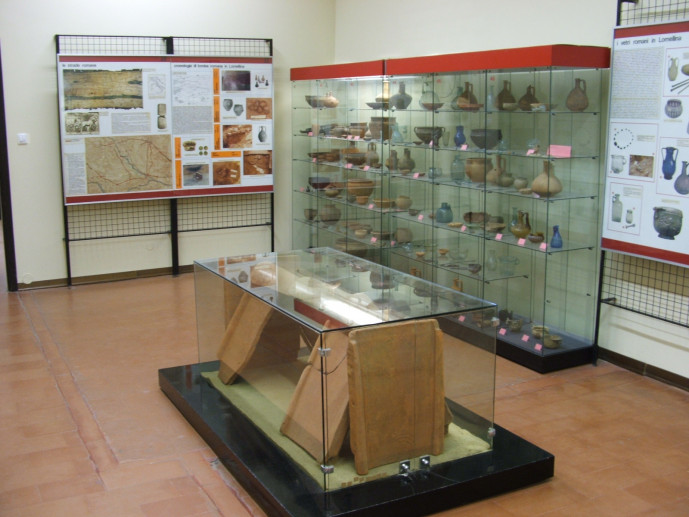
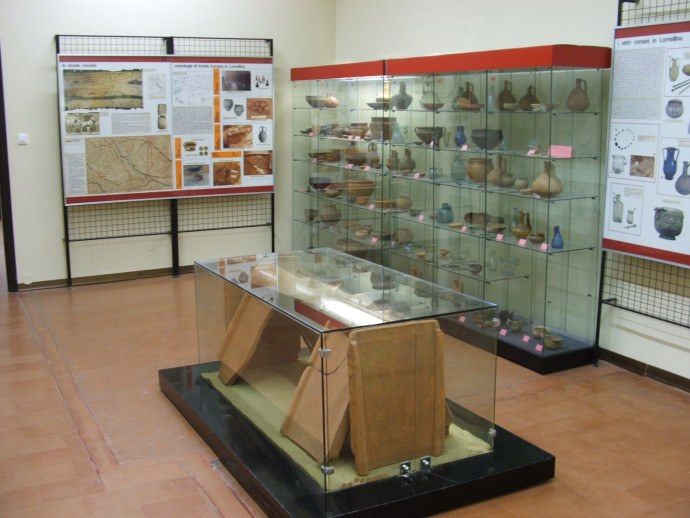
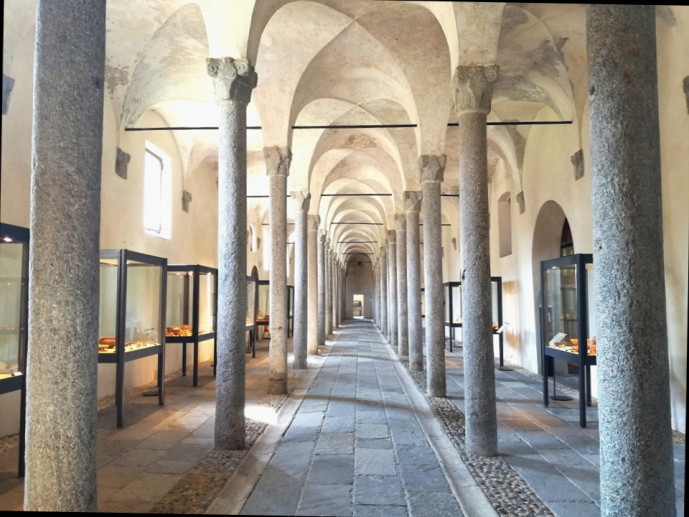
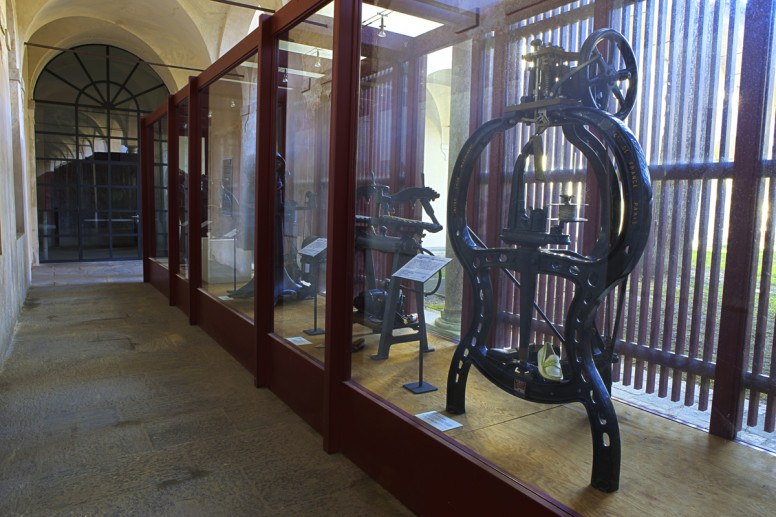
Inside the Litta-Beccaria Castle, within the Manica Lunga, the Lomellino Archaeological Museum offers one of the most complete cultural itineraries in the province of Pavia. With over 1,200 artefacts and an exhibition laid out across four rooms with explanatory panels richly illustrated with photographs and drawings, the museum guides visitors through thousands of years of human presence in the Lomellina.
The route begins with a large archaeological map of the Lomellina that orients visitors in both space and time, distinguishing the different chronological phases and the main areas of discovery through colours and symbols. From here, the itinerary unfolds across:
Prehistory and Protohistory — artefacts from the Late Mesolithic (7500–5500 BC), the Neolithic, the Chalcolithic and the Bronze Age, including flint tools recovered at Gambolò, Vigevano and Gravellona.
Celtic Age (2nd–1st century BC) — six Celtic funerary assemblages arranged in chronological order, featuring weapons (spearheads, knives), fibulae, Gaulish coins and ceramics including piriform and top-shaped vessels. Reconstructions of cremation and inhumation burials illustrate the evolution of funerary rites.
Roman Age (1st–2nd century AD) — funerary assemblages of exceptional richness: exquisite glass objects, terracotta figurines made from moulds (deities, married couples, animals), fine ceramics, oil lamps and terracotta applications for funerary beds. Dedicated sections focus on women's dress and personal grooming.
The itinerary is designed to be accessible to all visitors: each room is distinguished by a thematic colour that runs through the panels, display cases and captions, making orientation straightforward even for those without specialist knowledge. The museum works closely with the Lombardy Archaeological Superintendency and actively promotes scientific publications, conferences, exhibitions and school workshops.
Gambolò on the Cultural Trail of the Lomellina
Gambolò fits naturally into an itinerary exploring the authentic Lomellina — that stretch of land between the Ticino and the Po that shelters villages, castles and historical treasures rarely touched by mass tourism. The Litta-Beccaria Castle, with its museum and its thousand-year history, is one of those places capable of genuine surprise: modest in scale, immense in historical depth.
Visitors to Pavia who wish to venture beyond the medieval city centre, the Certosa and the banks of the Ticino will find in the Lomellina a different kind of experience — one of quiet streets, unexpected architecture and museums telling stories that the major travel guides seldom celebrate.
Practical Information for Visitors
Location
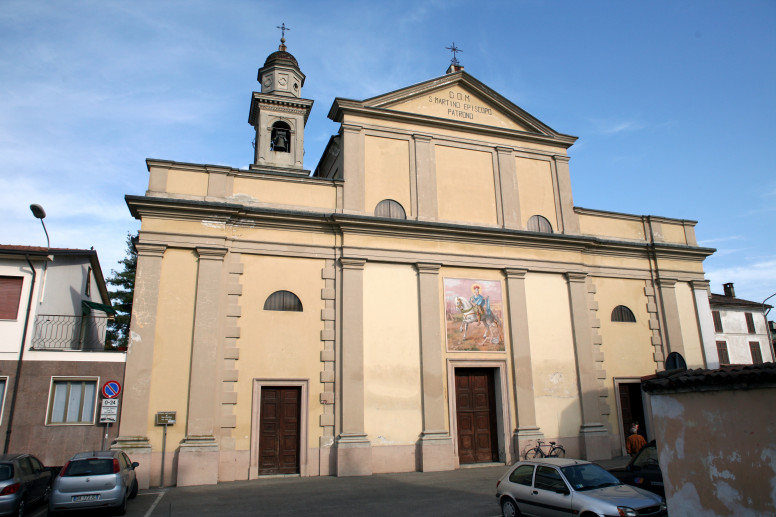
Piazza Castello, Gambolò (PV). The Lomellino Archaeological Museum is located inside the Litta-Beccaria Castle, in the Manica Lunga wing, accessible from the village's main square.
Opening Hours
The museum is open to the public on Sundays. On other days, visits are available by appointment with at least 15 days' notice for school groups and parties of 10–15 or more. Additional openings are scheduled during cultural events. The museum is closed on public holidays and throughout July and August.