- Villages
Vigevano
The pearl of the lombard Renaissance


In the final decades of the fifteenth century, at the height of the Italian Renaissance lordships, the fiefdom of Vigevano — a fortified borough of Lombard origin — lived its golden age. With the rise to power of Ludovico Sforza, known as il Moro, this city of the Lomellina was transformed into one of the greatest works of urban design in the history of Italy.
Capital of the Lomellina and one of the most captivating cities in the province of Pavia, Vigevano offers a journey through Renaissance elegance, extraordinary museums, centuries-old craft traditions and a lush natural landscape stretching to the banks of the Ticino river.
Piazza Ducale: Italy's Finest Renaissance Square
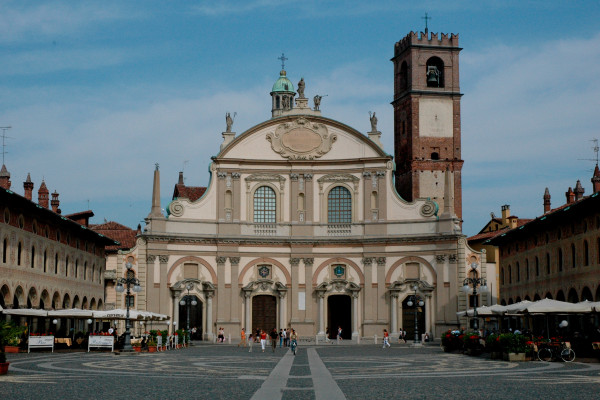
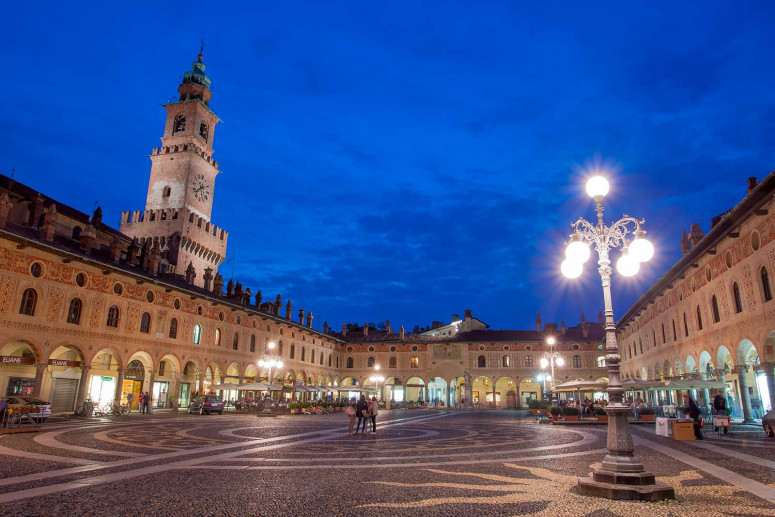
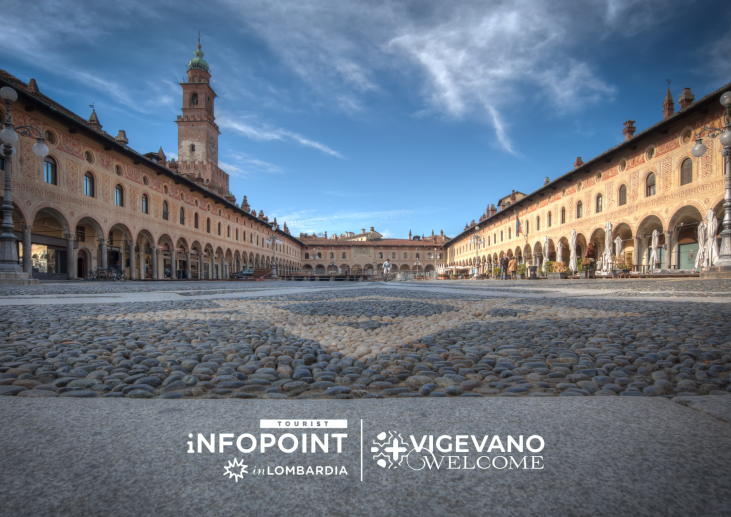
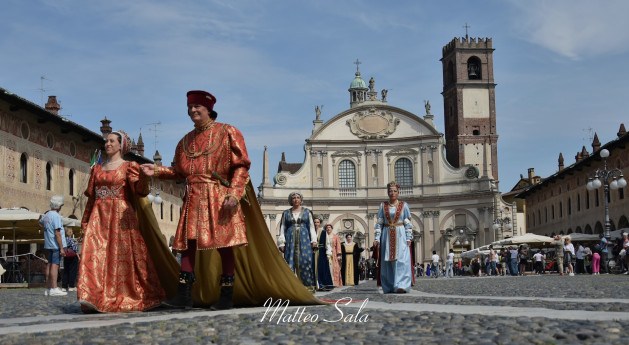
The beating heart of Vigevano is the magnificent Piazza Ducale, regarded as one of the most beautiful squares in Italy and a true landmark of Renaissance town planning. Built at the behest of Ludovico il Moro from 1492–93 and completed with remarkable speed, the square was conceived as an elegant "public antechamber salotto" leading to the grand Sforza Castle complex.
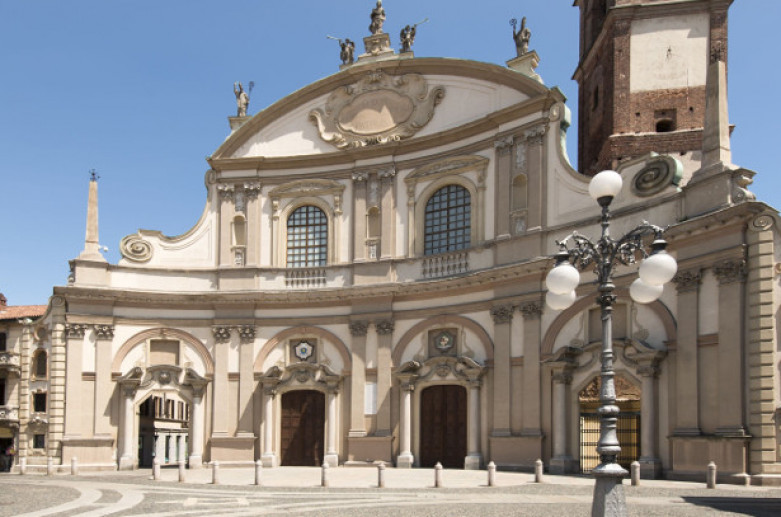
An elongated rectangle in near-ideal proportions — close to the 1:3 ratio theorised by the architect Filarete — the square is flanked on all sides by symmetrical arcades decorated with fine pilasters and frescoes that frame the majestic Cathedral of Sant'Ambrogio. The cathedral, begun in 1532 under Francesco II Sforza and completed in 1606, is distinguished by its extraordinary concave baroque facade designed by Bishop Juan Caramuel de Lobkowitz, who brilliantly adapted it to align with the square's axis.
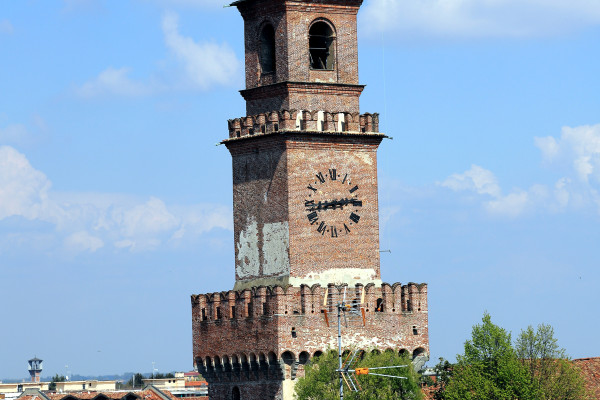
The entrance to the castle, almost hidden beneath the arcades along the south side, was once reached by way of a broad ramp — today a beautiful architectural feature in its own right — connecting the square to the upper level of the Sforza fortress. Above everything stands the Torre del Bramante, the tower overlooking the square and the castle.
A stroll beneath the arcades at sunset is an experience that stays with you: the warm tones of the stone, the play of light on the columns, the unmistakable profile of the tower. A timeless atmosphere that has made Vigevano one of the most sought-after destinations for travellers from across the world.
The Sforza Castle and the Strada Coperta
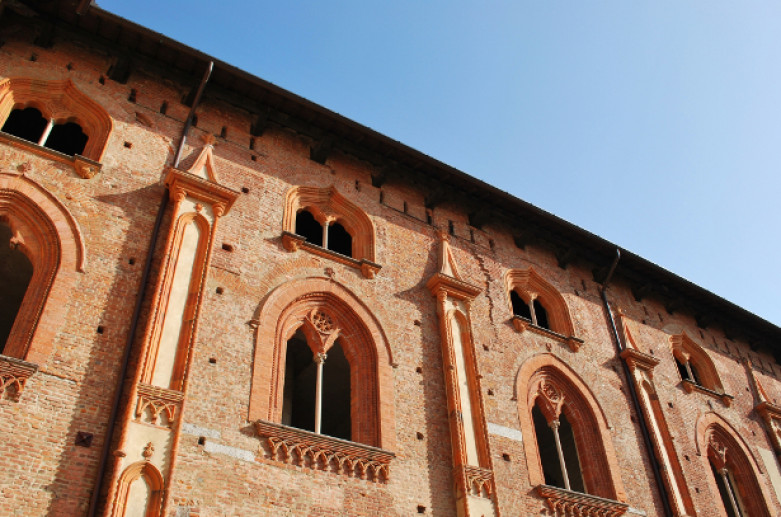
Dominating the city is the Sforza Castle of Vigevano, one of the largest fortified complexes in Europe. Rebuilt between 1492 and 1494 at the behest of Ludovico il Moro — who transformed a pre-existing Visconti fortress into a lavish ducal residence — the castle combines Gothic and Renaissance elements in an ensemble of extraordinary grandeur, with battlemented towers, inner courtyards and frescoed halls.
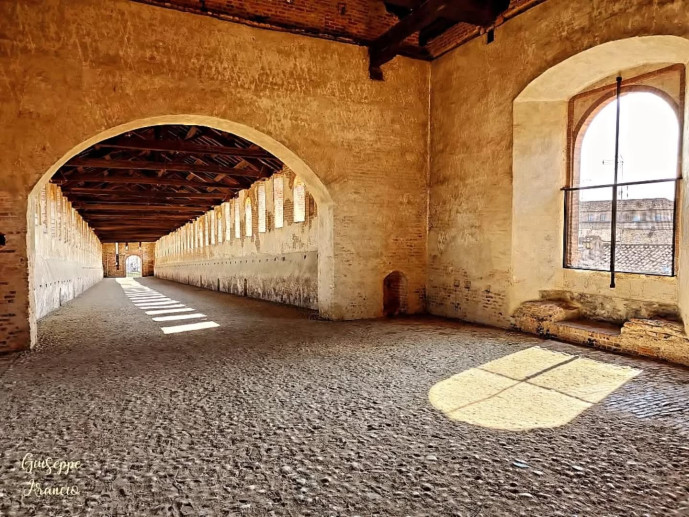
Among the complex's finest features is the Strada Coperta: a remarkable elevated covered passage of Sforza origin, unique of its kind in Italy and tall enough to allow horseback transit. This suspended corridor linked the new ducal palace to the older fortifications, and today offers visitors an exceptional vantage point over the square and the city below.
The elegant loggia supported by 48 columns, the Falconiera and the Loggia delle Dame — built for Duchess Beatrice d'Este — complete a complex that was also the residence of Leonardo da Vinci and Donato Bramante.
Within the castle is the MUVI Museum System — City of Vigevano, housing several remarkable collections distributed across its historic halls.
The Castle Museums: A Journey Through the Centuries
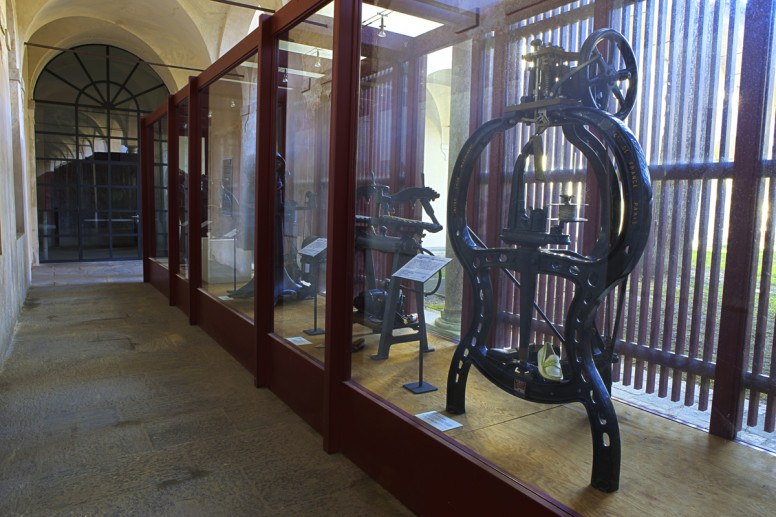
International Footwear Museum
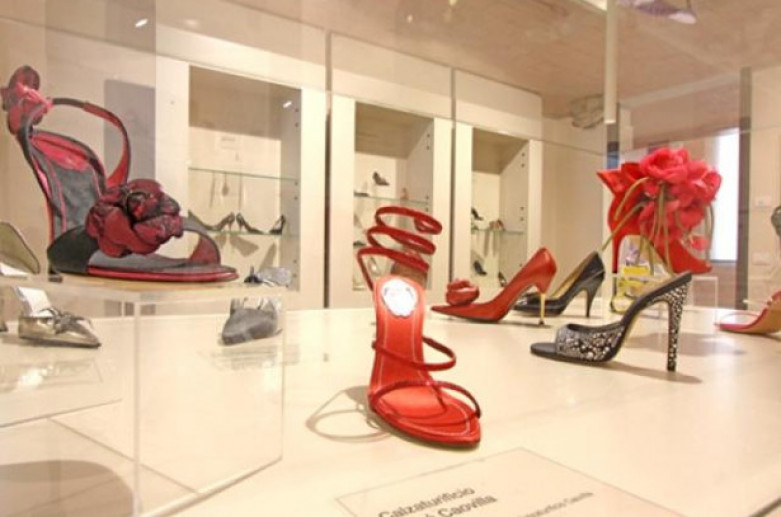
Vigevano is historically the Italian capital of the shoe. The International Footwear Museum "Pietro Bertolini" — the only public museum in Italy entirely dedicated to footwear — houses thousands of specimens from the sixteenth century to the present day, including the historic pianella slipper of Beatrice d'Este. A fascinating journey into the genius of Italian craftsmanship: from Renaissance sandals to baroque boots, from 1950s evening shoes to the creations of the great contemporary designers.
National Archaeological Museum of the Lomellina
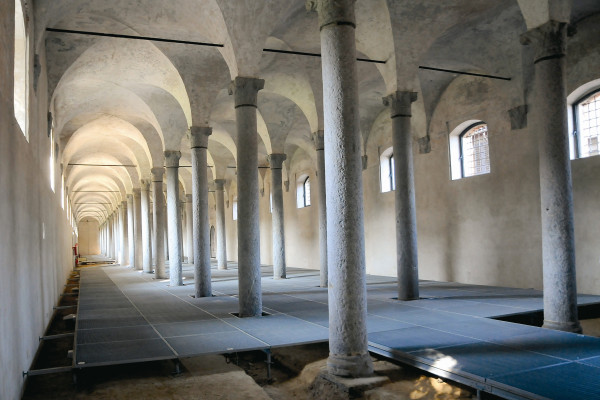
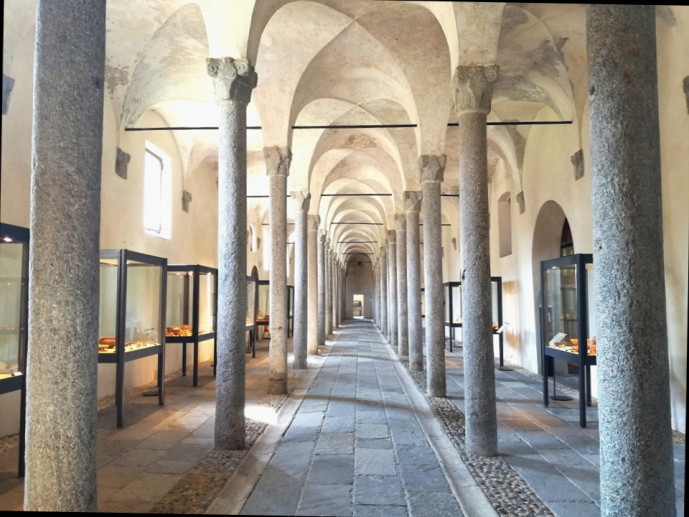
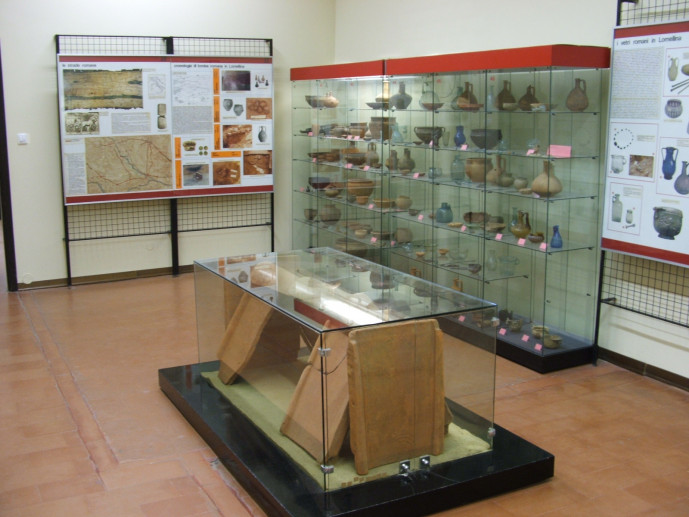
Housed in the splendid spaces of the fifteenth-century third stable block of the Sforza Castle, the National Archaeological Museum of the Lomellina brings together over 250 artefacts spanning from prehistory to the early Middle Ages. Opened in 1998 and extended in 2006 and 2018, the museum is essential viewing for anyone wishing to understand the origins of this territory. Among the most precious exhibits is a green blown-glass cup signed by the artist Aristeas (1st century AD): the only intact example among the very few known in the world. Particularly rich are the sections dedicated to Celtic and Roman necropolises, with funerary assemblages recovered during land reclamation works in the Lomellina rice fields.
Access from Corso della Repubblica 36 (Neo-Gothic Atrium) or through the castle courtyard from Piazza Ducale. Full price EUR 5.00 — reduced EUR 2.00. Free admission on the first Sunday of each month.
Leonardiana and Civic Picture Gallery
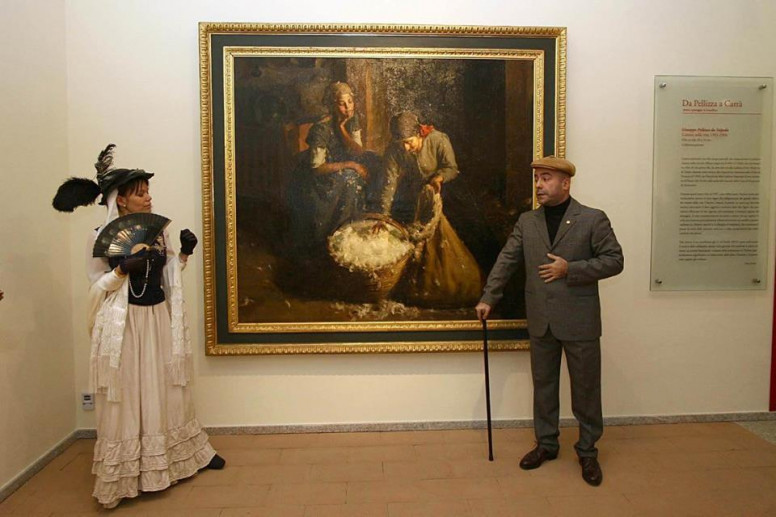
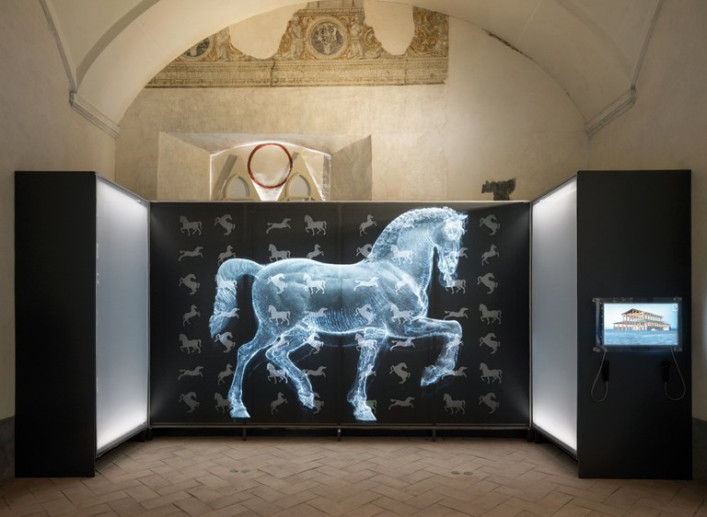
The castle also houses Leonardiana, a museum dedicated to the full body of work of Leonardo da Vinci — who was a long-term guest of the castle — and the Civic Picture Gallery "Casimiro Ottone", installed above Ludovico il Moro's stables, with works by artists from the Lomellina spanning the fifteenth to the twentieth century.
The Cathedral Treasury Museum: Sforza Gold and Silver
A few steps from the square, in the arcade of Palazzo Vescovile at Piazza Sant'Ambrogio 14, stands one of Vigevano's most precious and least known museums: the Cathedral Treasury Museum. Recognised by the Lombardy Region as a Museum Collection in 2007, the museum spans two floors across 13 rooms, one of which is a multimedia space, and includes the sumptuous apartments of the Bishop's Palace, visitable by prior appointment.
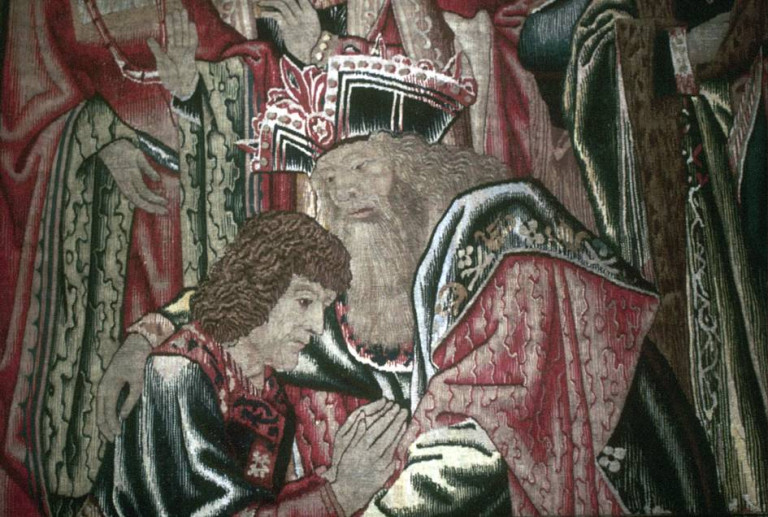
The core of the collection derives from the extraordinary donation made by Francesco II Sforza to the Diocese of Vigevano in 1534: gold and silver objects of the highest craftsmanship — cups, the processional cross, the precious Pace, croziers and an episcopal chalice — early sixteenth-century liturgical vestments, fine Brussels Flemish tapestries with biblical scenes woven around 1520 (including the large "Vashti" tapestry recently restored) and illuminated choir books. Also of great interest are six panel paintings by Bernardino Ferrari, of the school of the Leonardeschi, and a room dedicated to the brilliant Bishop Juan Caramuel, featuring a seventeenth-century wooden model of the cathedral and an original copy of his treatise "Architectura Civil" — the most extensive architectural treatise of the seventeenth century — printed right here in Vigevano.
Piazza Sant'Ambrogio 14, Vigevano. Open Saturday and Sunday 3:00 pm – 7:00 pm; other days by appointment. Tel: 0381 690727.
Climbing the Torre del Bramante: Vigevano's Finest View
One of the unmissable experiences in Vigevano is climbing the Torre del Bramante, the city's symbol and highest point. First erected in 1198 and completed in its current form at the end of the fifteenth century at the behest of Ludovico il Moro — who in a letter celebrated the achievement of endowing Vigevano with a new "most beautiful tower" — the tower rises across 7 floors to over 55 metres in height, with its characteristic tapering profile inspired by the Torre del Filarete of the Sforza Castle in Milan. It still appears on the city's coat of arms today.
The first four floors are open to the public: climbing approximately 100 steps brings you to the panoramic terrace with Ghibelline battlements, some 31 metres above the castle courtyard. From here the view sweeps 360 degrees: Piazza Ducale opens below like a miniature masterpiece, the rooftops of the historic centre stretch out towards the churches, and on clear days the horizon extends all the way to the waters of the Ticino. In fine weather, the lucky visitor may even make out the profile of the Alps — from Monte Rosa to the Cervino and the Lombard peaks.
The upper floors — housing the civic clock and the large seventeenth-century bell — are not accessible to the public. At the very top, the octagonal bronze lantern in baroque style, added in the seventeenth century in place of the original conical spire, completes the unmistakable silhouette that has defined Vigevano for centuries.
Admission: full price EUR 3.50 — reduced EUR 2.50 (over 65, families, groups) — students EUR 1.50. Combined ticket with the Footwear Museum, Picture Gallery and Tower: EUR 6.50. Tickets at the castle Infopoint (tel. 0381 299199). Opening hours: Tue–Thu 10:00–13:00 / 14:00–17:00; Fri–Sun and public holidays 10:00–18:00 continuous. Closed on non-holiday Mondays. Unaccompanied minors not admitted.
The Ticino Park: Nature beside history
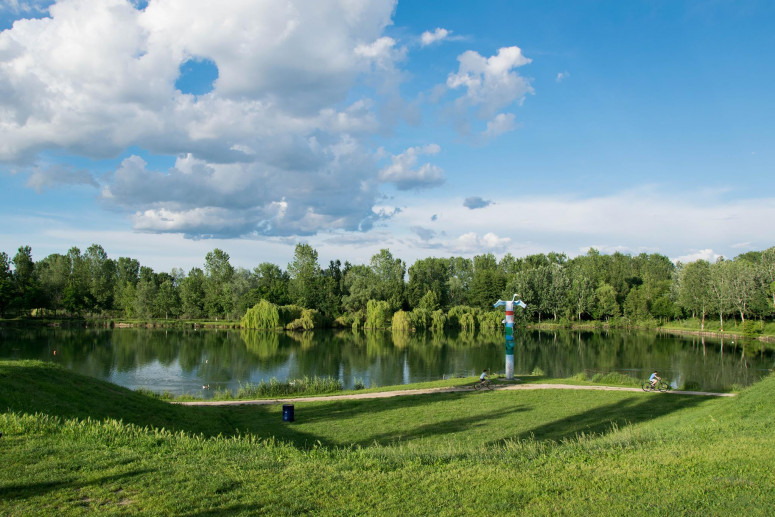
A short walk from the historic centre lies the Valle del Ticino Natural Park, Lombardy's oldest protected area and one of Europe's most important nature reserves. Oak, poplar and willow forests are reflected in the river's waters, sheltering extraordinary biodiversity: herons, storks, otters and dozens of migratory bird species.
The park is a paradise for nature lovers and outdoor sports enthusiasts: cycling and walking trails wind through woodland and rice fields, offering excursions to suit every level of fitness. A green and peaceful retreat, perfect for stepping away from the bustle of everyday life.
Flavours of the Lomellina: the Gastronomy of Vigevano
The cuisine of Vigevano is rooted in the rural traditions of the rice fields, the kitchen garden, the rivers and the farmsteads: simple, genuine dishes with bold, honest flavours. The rice fields that change colour with the seasons yield a rice of outstanding quality, the undisputed star of the local table, while the goose — a precious resource of the Lomellina farmsteads since the Middle Ages — gives rise to the area's most distinctive cured meats.
Dishes and products not to be missed:
Risotto with sausage The signature dish of Lomellina tradition: local rice toasted in a soffritto of lard and onion, with fresh sausage meat and chicken stock. Also the base for countless variations: with frogs, with asparagus from Cilavegna, with porcini mushrooms.
Goose Salami of Vigevano A product carrying the DE.C.O. (Municipal Denomination of Origin) certification from the City of Vigevano: 100% Italian goose meat, aged 60 days. Born of the medieval Jewish tradition of Mortara, which developed this delicacy as an alternative to pork. The Goose Salami of Mortara holds IGP status.
Fried frogs and risotto with frogs Frogs, at home in the ditches and rice fields of the area, are one of the most emblematic products of the Lomellina. Fried frogs and the refined risotto with frogs are dishes to seek out in the area's traditional restaurants.
Salam d'la Duja The typical pork salami preserved under fat in terracotta crocks: made in winter and consumed after more than eight months of curing, it is a cornerstone of the local farmstead tradition.
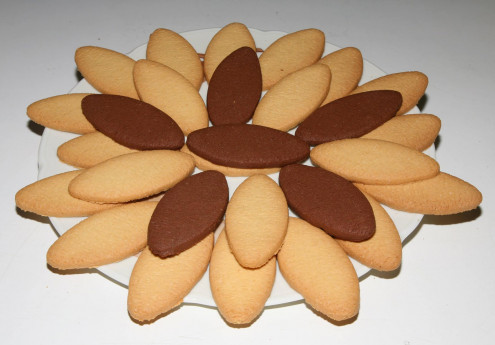
Dolce del Moro & Bramante Biscuits The classic sweets of Vigevano: the Dolce del Moro, whose recipe dates back to the era of Ludovico il Moro, and the Bramante Biscuits, named in honour of the great architect who was a guest of the castle. The Lombard Sbrisolona rounds off the local pastry tradition.
How to Reach Vigevano
By car from Milan From the Milan western ring road (tangenziale ovest), follow the SS494 Vigevanese. Approximately 37 km, estimated journey time 45–50 minutes. From Turin: take motorway A4 to Novara Est, then the SS596 towards Vigevano.
By train from Milan Trenord line Milano Porta Genova–Mortara with a stop at Vigevano. Trains run approximately every hour; journey time around 31–35 minutes. Vigevano station is approximately 700 metres (10 minutes on foot) from Piazza Ducale.
From the airport Milan Malpensa Airport: approximately 36 km from Vigevano (35–45 minutes by car). Milan Linate Airport: approximately 50 km. It is also possible to travel into Milan and continue by train.
By coach Coach services run from Pavia coach station, arriving at Piazza Calzolaio d'Italia, a short walk from the town centre.
Museum opening hours Castle Museums: check the official website of the City of Vigevano and vigevanowelcome.it for seasonal updates. Cathedral Treasury Museum: Sat–Sun 3:00 pm–7:00 pm (other days by appointment). Archaeological Museum: see museilombardia.cultura.gov.it.
Tourist information visitpavia.it — vigevanowelcome.it — IAT Tourist Office of Vigevano and the Lomellina, Piazza Ducale.
Vigevano on Screen: Il Maestro di Vigevano with Alberto Sordi
Vigevano is not only a heritage of art and history: it is also a protagonist of the great Italian cinema. In 1963 director Elio Petri brought to the screen Il Maestro di Vigevano, adapted from the celebrated novel by Lucio Mastronardi — a writer from Vigevano whose raw and visionary prose had already caused a stir, portraying the Lombard province of the economic boom with unflinching honesty.
The lead role is played by a masterly Alberto Sordi, as primary school teacher Antonio Mombelli: a man proud of his modest calling as an educator, swept along by the ambitions of his wife Ada (played by British actress Claire Bloom), who pushes him to abandon his post and open a small shoe factory. In the background: the Vigevano of the 1960s and its footwear district — a city that judges people, as Sordi's narration warns from the very first frames, by the shoes they wear.
The film, shot largely on location in Vigevano itself, was a major event for the city — and a source of controversy: the Provincial Schools Superintendent banned filming in the local primary school, and the teaching profession protested loudly against Mastronardi. The city premiere took place on 23 December 1963 in a tense atmosphere, but the film went on to achieve great national success.
With a screenplay co-written by Petri and Age & Scarpelli and a score by Nino Rota, the film is today regarded as one of the masterpieces of Italian dramatic comedy: a bitter, lucid portrait of Italy in the economic miracle years, where progress overwhelms those who still believed in the value of intellectual dignity over material gain. Sordi — in one of his most melancholy and atypical roles — delivers a performance that many critics consider among the finest of his career.
For film enthusiasts visiting Vigevano, following the locations of the film — the streets of the historic centre, the square, the workshops — is an original and evocative way to rediscover the city through the eyes of cinema.
What to See in Vigevano: Essential Highlights
For those planning a visit to Vigevano, here are the must-see attractions — ideal for a day trip or a weekend discovering the Lomellina:
1. Piazza Ducale — Vigevano's absolute symbol. Arriving at dawn or dusk makes for an unforgettable experience.
2. Cathedral of Sant'Ambrogio — The cathedral with its extraordinary concave baroque facade by Bishop Caramuel — a masterpiece of architectural originality.
3. Sforza Castle and the Strada Coperta — One of the largest castle complexes in Europe, complete with the elevated gallery unique in Italy.
4. Climb the Torre del Bramante — Approximately 100 steps to the Ghibelline battlements at 31 metres: the finest panorama over Piazza Ducale, the castle, and — on clear days — the Alps.
5. International Footwear Museum — One of the most original museums in Italy: the story of Italian craftsmanship told through shoes, including Beatrice d'Este's pianella.
6. National Archaeological Museum of the Lomellina — Finds from prehistory to the early Middle Ages in the castle's fifteenth-century stables: the Aristeas cup is unmissable.
7. Cathedral Treasury Museum — Sforza gold and silver, Flemish tapestries from 1520, and works by the Leonardeschi in the heart of the Bishop's Palace.
8. Ticino Park — Unspoilt nature and cycling paths just minutes from the historic centre.
9. Historic centre and craft workshops — Among the streets of the centre you will still find traditional workshops, delicatessens stocked with local specialities and historic cafes.
10. Locations of the film 'Il Maestro di Vigevano' — A cinematic itinerary in the footsteps of Alberto Sordi and Elio Petri (1963): the streets, squares and workshops of the historic centre that appear in this celebrated film adapted from Lucio Mastronardi.
Visiting Vigevano means allowing yourself to be won over by a city that has preserved its glorious past while remaining alive and welcoming to every traveller. A journey through art, history, nature and flavour in the heart of Lombardy — an experience well worth the trip.
Other links
FacebookVigevano Welcome
Live streaming Youtube della Piazza Ducale