- Villages
Mortara
History, flavours and traditions in the heart of the Lomellina


Nestled in the plains of the Lomellina, Mortara is a thriving agricultural, industrial and commercial centre. This city holds a remarkable layering of medieval history, sacred architecture, outstanding food traditions and popular festivities that enliven its calendar throughout the year. Let us explore together what to see and do in Mortara — an unmissable stop for anyone wishing to discover the Pavia area in its most authentic essence.
Mortara and Charlemagne: A History That Reaches Back Far
Few people know that the territory of Mortara is linked to one of the most fascinating episodes of the early European Middle Ages. In the autumn of 773, during Charlemagne’s campaign against the Lombard king Desiderius, tradition places in this area a clash that has come down to history as the Battle of Pulchra Silva.
Although not confirmed with certainty by written sources, this episode fits into a pivotal moment: the fall of the Lombard kingdom and the beginning of Carolingian supremacy over Italy. A tale that, hovering between history and memory, still lends depth and fascination to the identity of this territory.
In the Middle Ages, Mortara became an important resting point along the Via Francigena, the great pilgrimage route that led from Canterbury to Rome, crossing the Lomellina and bringing pilgrims, merchants and nobles from across Europe. This role as a crossroads brought considerable prosperity and made the town the seat of one of the most influential religious congregations of the age: the Canons Regular of the Lateran, whose presence left a mark still visible today in the urban landscape.
What to See in Mortara: Churches and Monuments
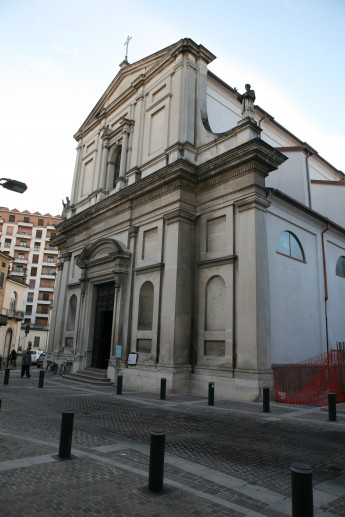
The historic centre of Mortara is dotted with religious buildings of considerable artistic and architectural merit — a direct legacy of its glorious medieval season. A visit to the city’s sacred heritage is a genuinely surprising experience, remarkable for the quality and variety of the works preserved.
The Basilica of San Lorenzo
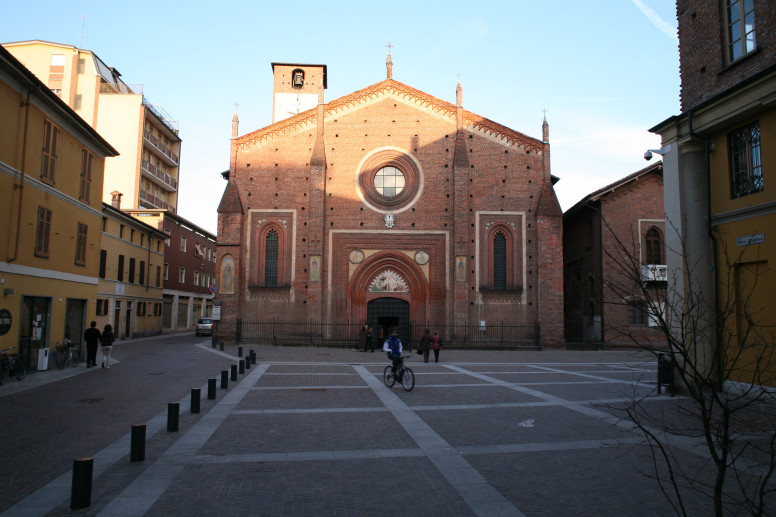
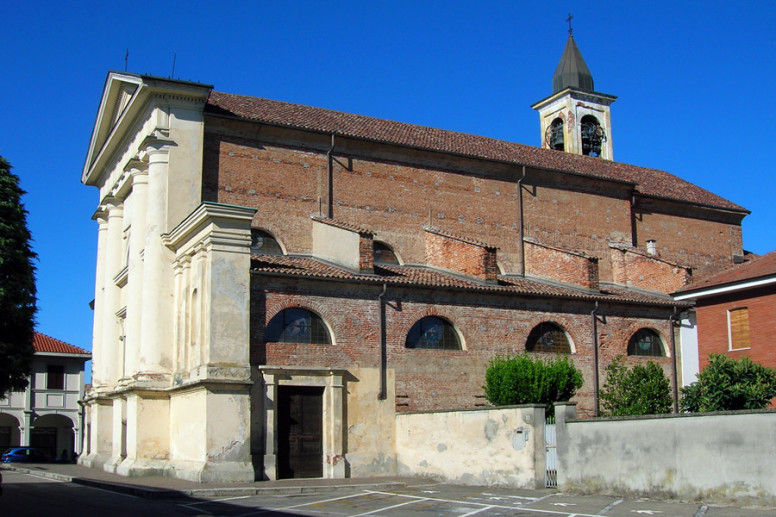
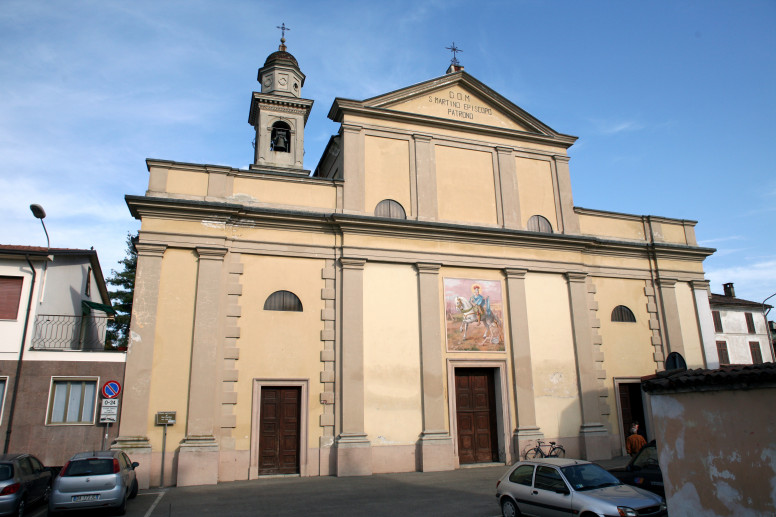
The symbol of Mortara is the Basilica of San Lorenzo, a Romanesque-Gothic church dating back to the 14th century. Its interior preserves precious frescoes and works of art from the Lombard school, testimony to a refined and cultivated patronage. The brick facade — characteristic of Po Valley architecture — rises with quiet elegance at the heart of the town.
Santa Maria del Lavello
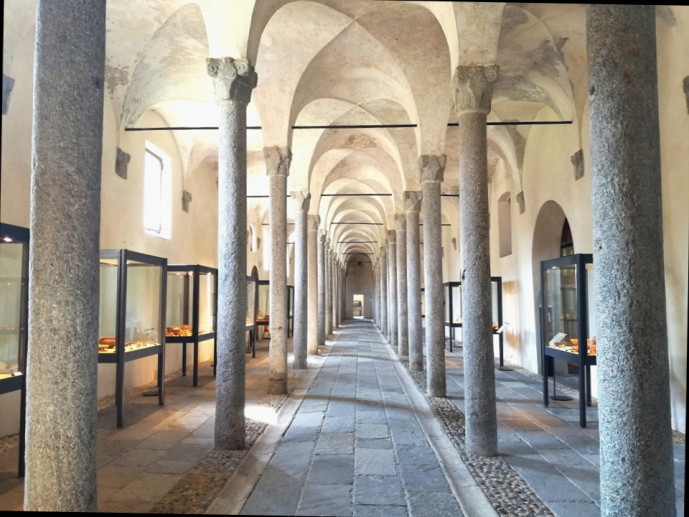
Another unmissable stop is the complex of Santa Maria del Lavello, an ancient sanctuary rooted in popular Marian devotion, with a cloister of great evocative power. The convent ensemble, formerly belonging to the Lateran Canons, retains the atmosphere of centuries of monastic and spiritual life.
Mortara on the Via Francigena: Walking and Spirituality
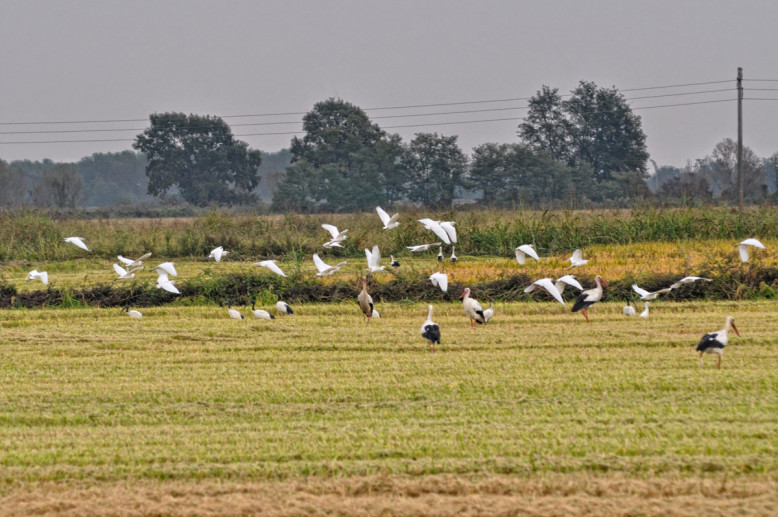
For walkers and slow-travel enthusiasts, Mortara is a significant staging post along the Via Francigena, the historic route crossing the province of Pavia from north to south. The Lomellina stretch offers landscapes of rare beauty — mirroring rice paddies, historic farmhouses and silent villages — in an atmosphere suspended in time that invites reflection and discovery. Mortara welcomes pilgrims with dedicated facilities and genuine hospitality, in keeping with a centuries-old tradition rooted in the medieval era.
The Abbey of Sant’Albino
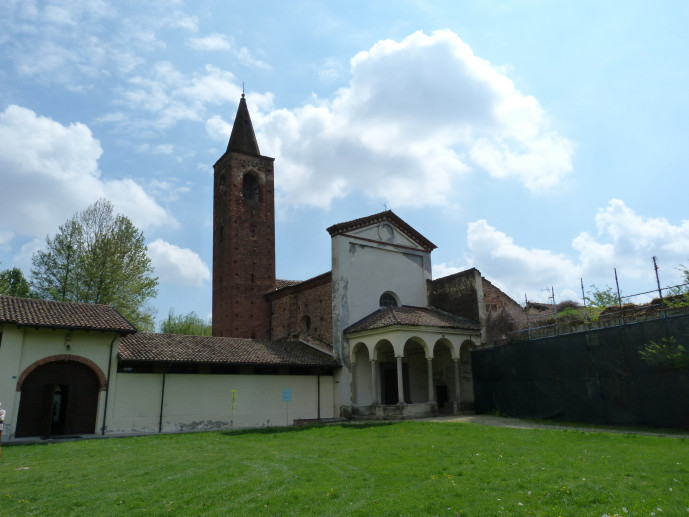
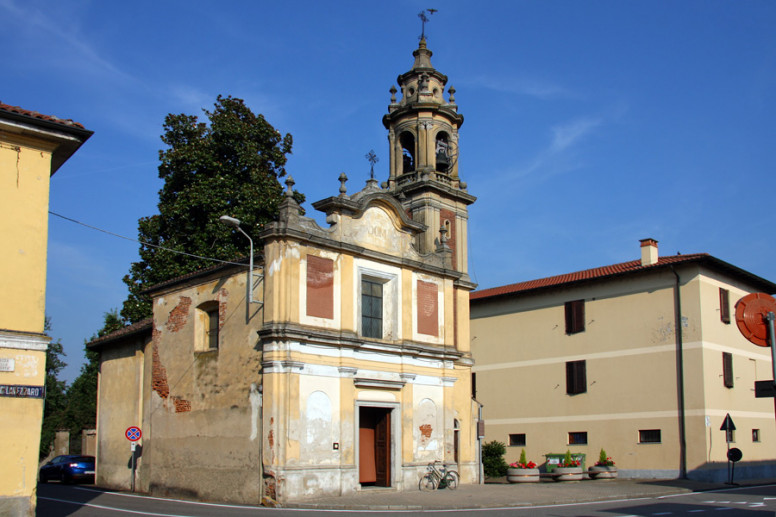
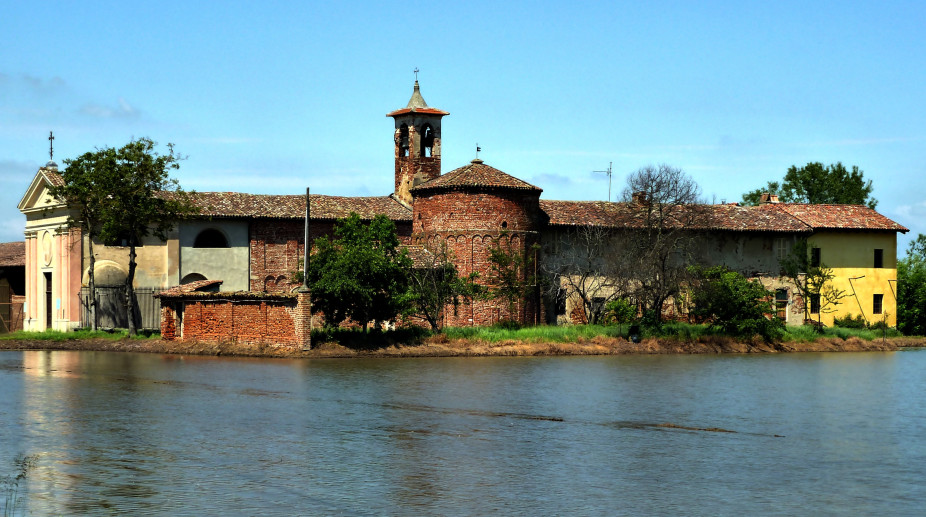
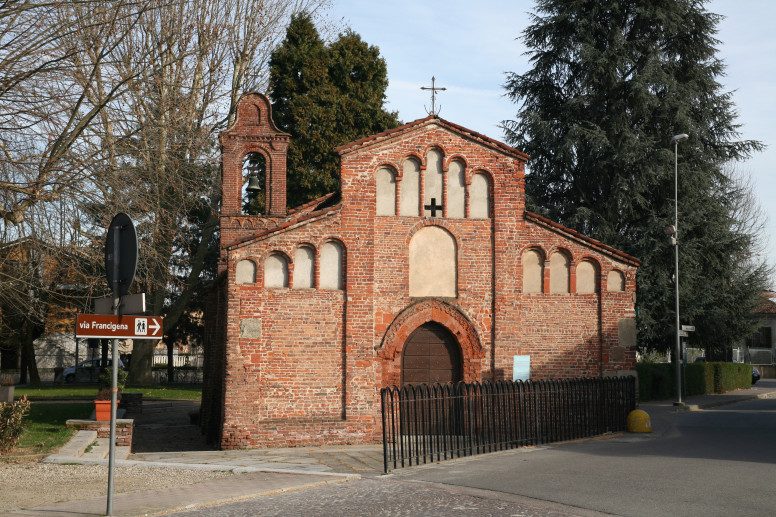
Not to be missed is the Abbey of Sant’Albino, an ancient religious complex on the outskirts of Mortara, historically linked to the Via Francigena. Its origins date to the 5th–8th centuries AD, and the building was renovated several times over the centuries, retaining a layout that combines Romanesque elements — such as the apse and bell tower — with Renaissance additions, most notably in the portico at the front.
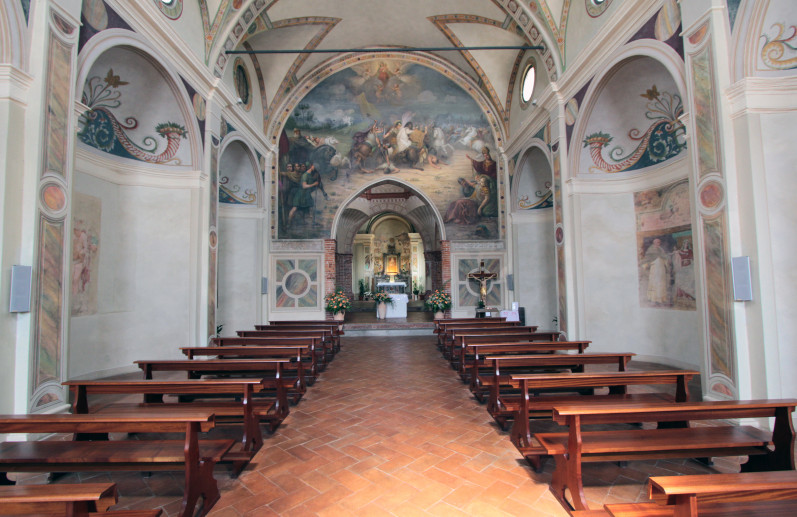
The abbey is associated with the tradition that it served as an important rest and worship point for pilgrims, and was rebuilt or enlarged in connection with the events of the 8th century, remaining for centuries a significant stop along the road to Rome. Inside, visitors can admire 15th-century frescoes and remains of the medieval cloister, while the walls bear inscriptions left by pilgrims over the centuries. Its history and location bear witness to the religious and cultural importance that Sant’Albino has held in the story of this territory.
Mortara’s Goose Salami IGP: A Gastronomic Excellence of the Lomellina
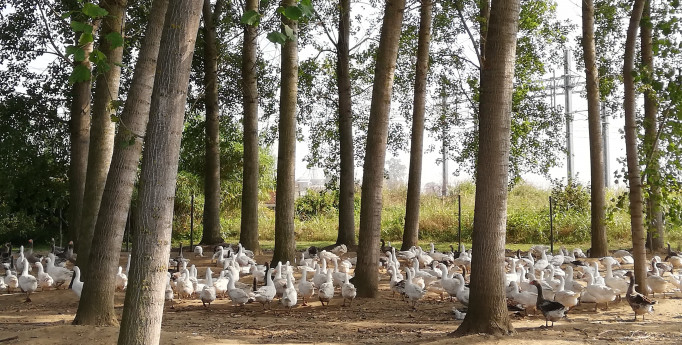
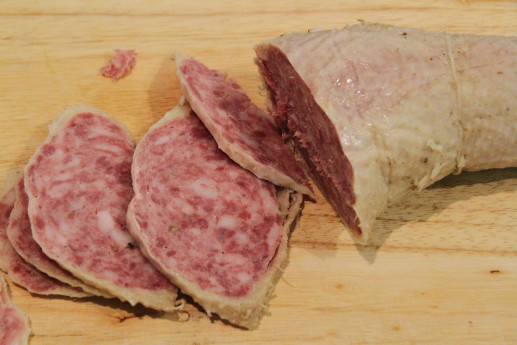
No account of Mortara would be complete without its most celebrated product: the Salame d’Oca di Mortara IGP — Mortara’s Goose Salami, carrying Protected Geographical Indication status. Known as “ecumenical” for its origins shared between Jewish and Christian traditions, it has been a symbol of cultural coexistence since the 14th century. This one-of-a-kind cured meat is made from a skilful blend of goose and pork, stuffed into the goose’s neck and aged according to a recipe that has remained unchanged across the centuries.
Alongside the goose salami, Mortara’s gastronomic tradition boasts other outstanding specialities: goose prosciutto and liver paté, products that speak of a peasant culture capable of turning every part of the animal into genuine culinary art.
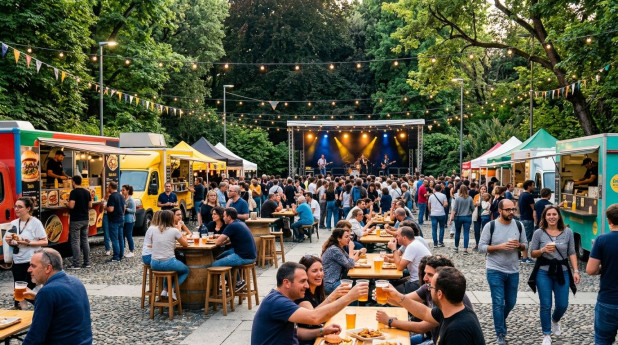
To taste these local treasures, visitors can explore the artisan shops and markets in the town centre, or time their visit to coincide with the Sagra del Salame d’Oca — the autumn festival that draws food lovers from across Lombardy and beyond.
The Palio Città di Mortara: History and Spectacle on the Last Sunday of September
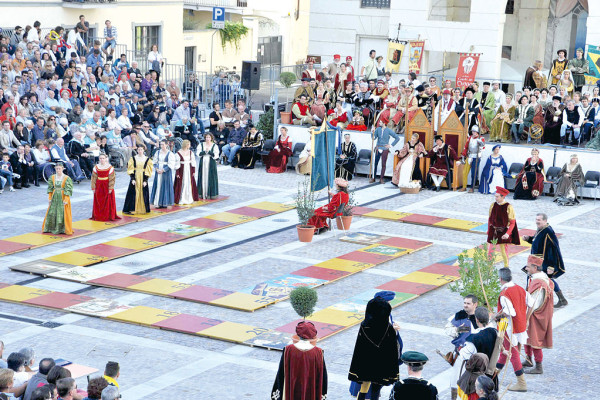
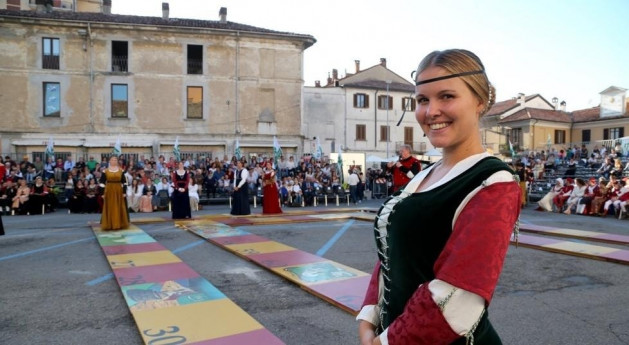
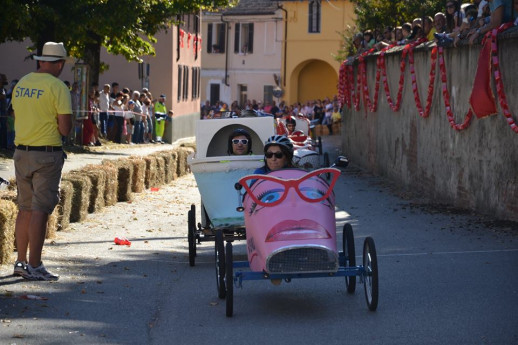
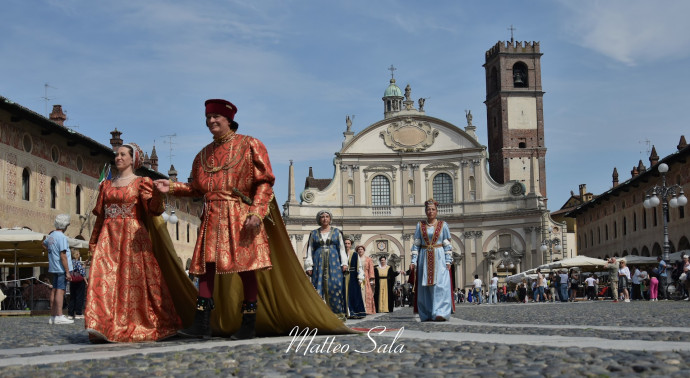
Every year, on the last Sunday of September, Mortara is transformed into a grand medieval stage by the Palio Città di Mortara, a historical and folk event held without interruption since 1970. The event is closely linked to the Sagra del Salame d’Oca, and together they form one of the most evocative and well-attended weekends in the Pavia calendar.
At the heart of the event is a magnificent historical procession set in the Sforza era, with over 400 costumed participants parading through the streets of the centre, evoking the Mortara of the 15th century under the lordship of the Sforza of Milan. Knights, noblewomen, men-at-arms, musicians and flag-throwers bring the town to life in a spectacle of great visual impact, before the palio itself, in which the town’s districts compete in traditional contests.
The Palio is a perfect opportunity to experience Mortara at its most festive and community-spirited — an event not to be missed for anyone visiting the Lomellina in autumn.
How to Get to Mortara and Where It Is
Mortara lies in the Lomellina, the western portion of the province of Pavia, approximately 40 km from the provincial capital, and is easily reachable by both car and train. The railway station is served by the Alessandria–Milan line, with frequent connections. Its strategic position makes Mortara an excellent base for exploring the wider Lomellina, with its rice-field landscapes, historic villages and monumental farmhouses.
Other links
FacebookPalio di Mortara
Sagra del Salame d’Oca di Mortara