- Art & Culture
Vertical Machines
An exhibition in Pavia explores the history of elevators


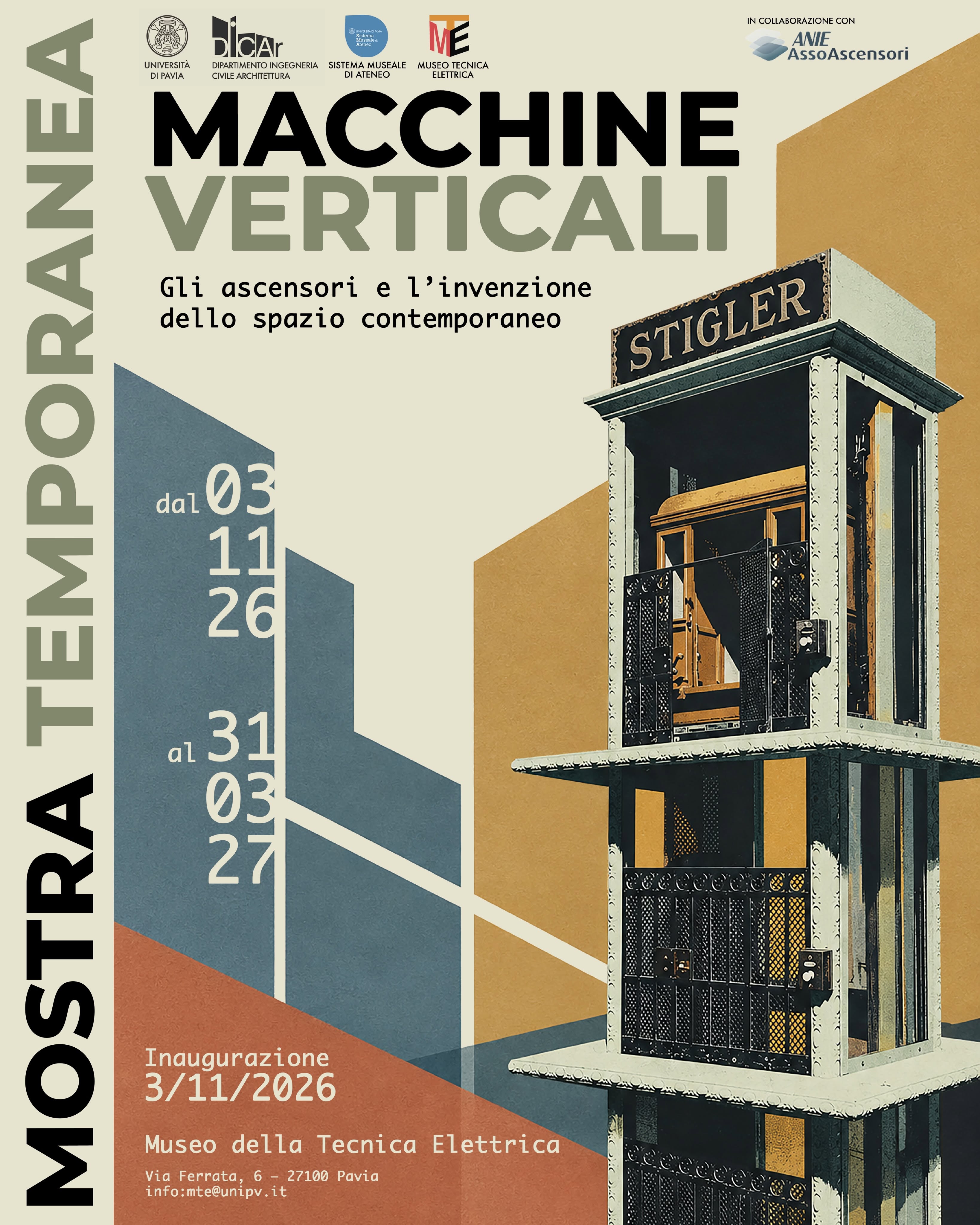
From 3 November 2026 to 31 March 2027, the Museum of Electrical Technology at the University of Pavia hosts an exhibition exploring the evolution of elevators and their role in transforming cities, architecture and everyday life.
All it takes is the press of a button to go up or down a floor. A simple, everyday gesture that hides one of the inventions that has most profoundly changed the appearance of modern cities. This is the starting point of “Vertical Machines. Elevators and the Invention of Contemporary Space”, an exhibition hosted by the Museum of Electrical Technology at the University of Pavia from 3 November 2026 to 31 March 2027.
The exhibition explores how elevators have transformed the way buildings are designed and inhabited, making skyscrapers possible, reshaping interior spaces and contributing to new forms of urban life. More than just machines for moving between floors, elevators are technologies that have profoundly changed the relationship between architecture, cities and society.
Seven floors exploring more than a century of innovationThe exhibition is organised into seven thematic sections, symbolically described as “floors”, taking visitors on a journey from the origins of the invention to its representations in contemporary culture.
One of the highlights is an original scale model of a historic Stigler elevator, belonging to the permanent collection of the Museum. This artefact bears witness to the contribution of Italian industry to the development of the elevator sector and introduces a story of technological innovation, industrial design and architectural transformation.
The exhibition explores the earliest applications of elevators, the transition from goods transportation to passenger lifts, and the remarkable hydraulic systems built for the Eiffel Tower on the occasion of the 1889 Paris Universal Exhibition.
A dedicated section focuses on skyscrapers and vertical cities. The exhibition also features a photographic project by Francesco Cotana, documenting elevator doors and shafts in the lobbies of some of Manhattan's most famous skyscrapers.
Particular attention is given to the elevator cabin, a space that has gradually evolved beyond its purely technical function to become a carefully designed and decorated environment. Historical catalogues, photographs and an immersive simulation allow visitors to virtually step inside some of the cabins of the past and discover how materials, shapes and design solutions have changed over time.
The journey continues with the social and public uses of elevators in hotels, department stores and urban infrastructure. The industrial dimension is also explored through patents, control systems, catalogues and advertising campaigns.
The final section turns to the world of imagination, from the futuristic elevators designed by Antonio Sant'Elia to the presence of these machines in cinema, literature, comics, video games, television series and music.
Research and the heritage of technologyThe exhibition brings together the history of technology, architectural history, industrial heritage and urban culture. The project is part of an international research initiative dedicated to understanding and safeguarding the heritage of vertical transportation, developed also through the Ascensores y Funiculares del Mundo international conferences, promoted by TICCIH and the University of Pavia in Santiago de Chile and Valparaíso, in 2011 and 2025 respectively.
The scientific curators are Carlo Berizzi, Alessandro Greco, Francesca Picchio and Massimiliano Savorra. The exhibition is accompanied by a scientific catalogue featuring contributions from specialists and university professors.
Visitor informationExhibition: Vertical Machines. Elevators and the Invention of Contemporary Space
Venue: Museum of Electrical Technology, University of Pavia
Dates: 3 November 2026 – 31 March 2027
Opening ceremony: Tuesday 3 November 2026, at 11:00 am
A visit to the Museum of Electrical Technology offers the opportunity to look at an everyday object from a different perspective. Behind the simple act of pressing a button lies a story of ingenuity, research and innovation that has helped shape the contemporary city.