- Art & Culture
A Triptych on the Pilgrims' Way
Three Hidden Treasures between Valle Salimbene, Vaccarizza and San Giacomo della Cerreta - Via Francigena


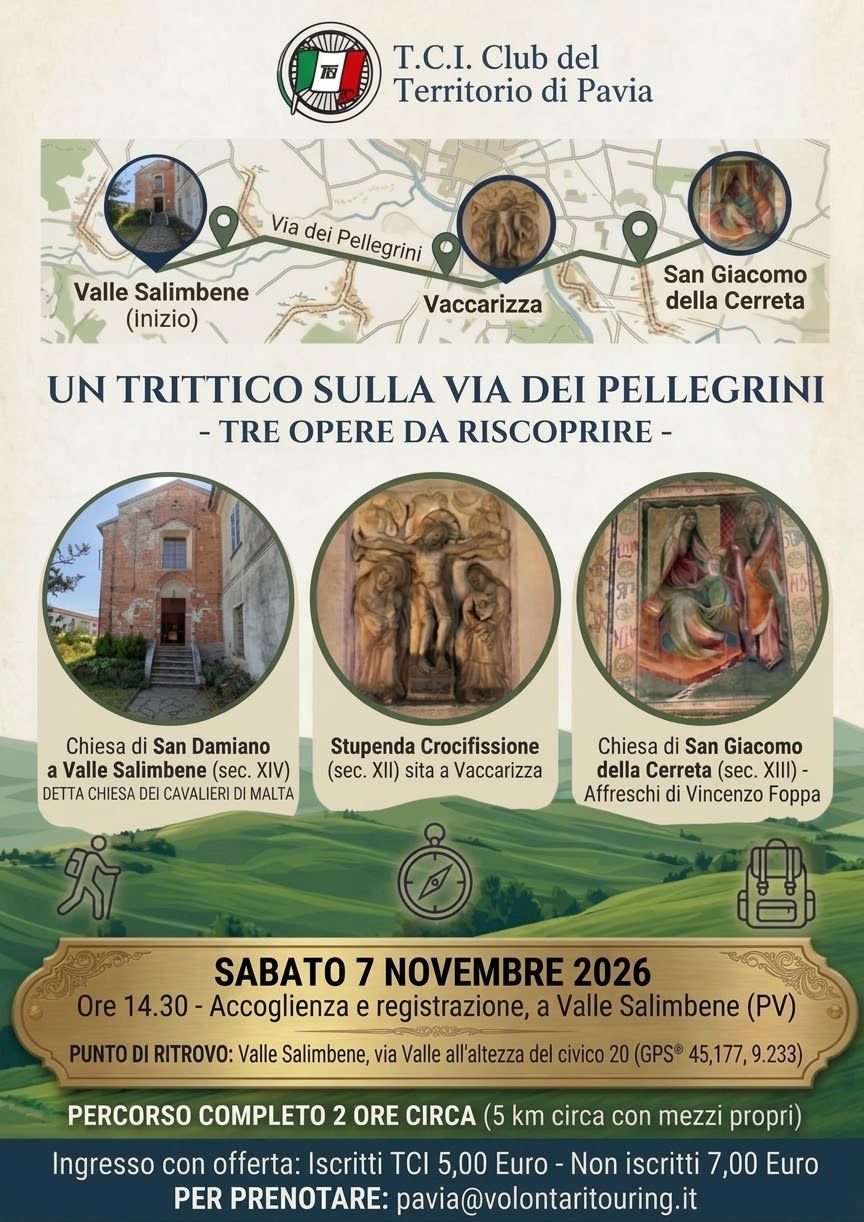
On Saturday 7 November 2026 the Pavia branch of the Touring Club Italiano (TCI Club del Territorio di Pavia) presents "A Triptych on the Pilgrims' Way", an afternoon guided tour east of Pavia in search of three little-known masterpieces of sacred art: the Church of San Damiano in Valle Salimbene, the Crucifixion of Vaccarizza and the Church of San Giacomo della Cerreta with its fifteenth-century frescoes.
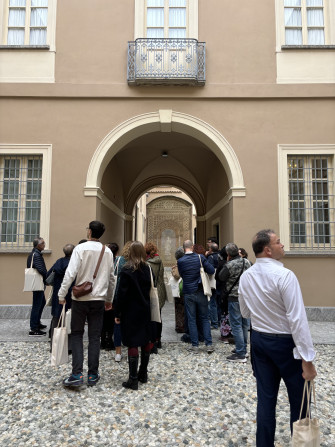
Participants meet at 2.30 pm in Valle Salimbene, in Via Valle near number 20, for welcome and registration. The full tour takes about two hours and covers roughly five kilometres between its three stops, travelled with your own transport — always accompanied by Touring Club volunteers.
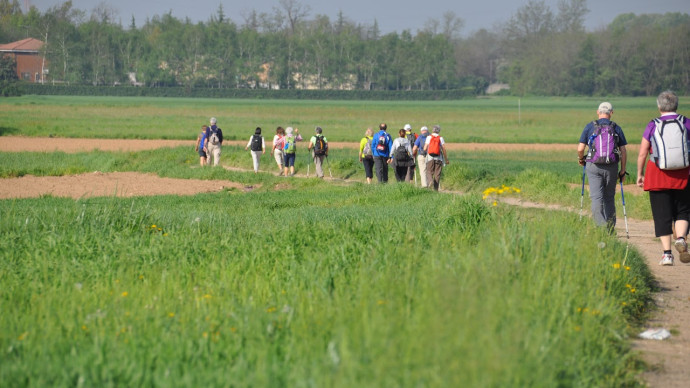
It is a rare opportunity to step inside places that are usually closed or seldom visited, and to see the Pavia countryside through the eyes of those who crossed it on foot for centuries: pilgrimage, history and art merge into a single story.
Pavia, a crossroads of medieval pilgrims
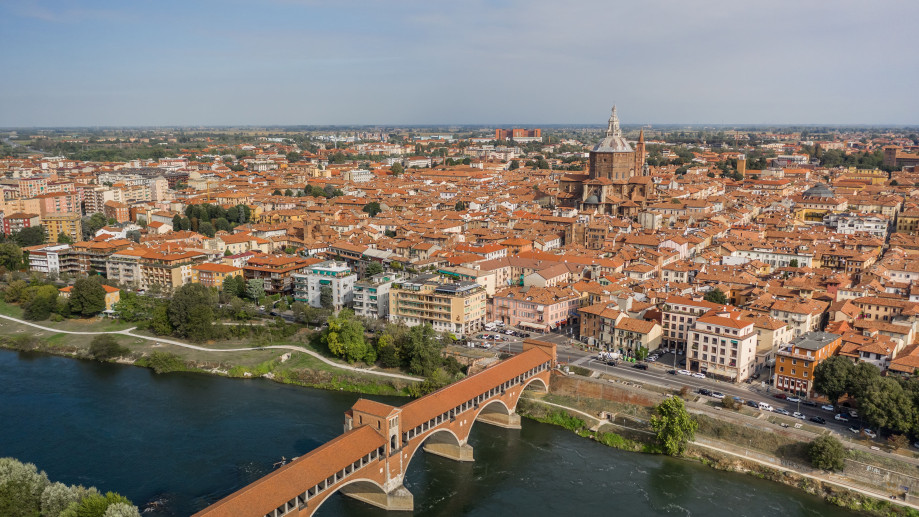
For centuries Pavia and its surrounding countryside were one of the great transit hubs for European pilgrims. The former capital of the Lombard Kingdom was an essential stop on the Via Francigena, the road leading from northern Europe down to Rome, which already appeared in the travel diary of Archbishop Sigeric of Canterbury at the end of the tenth century.
Not every traveller, however, was bound for the tomb of Saint Peter. Many reached the banks of the Po to take a boat to Venice and, from there, sail on to the Holy Land: the countryside east and south of the city was thus crossed by a constant flow of men and women on the move.
Along these routes rose hospices, oratories and commanderies of the military orders, offering shelter, care and spiritual comfort. Place names still preserve that memory — Ospedaletto ("little hospital"), San Leonardo, San Giacomo, after Saint James, patron of pilgrims — and the three stops on this tour are among its most eloquent witnesses.
First stop: San Damiano in Valle Salimbene, the Church of the Knights of Malta
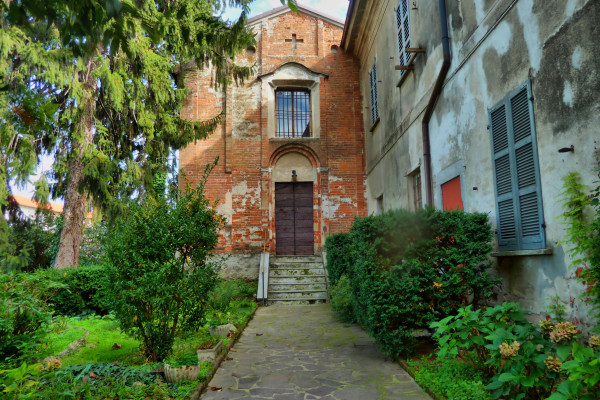
The tour begins at the oratory of San Damiano, in the hamlet of Motta San Damiano in Valle Salimbene, just outside Pavia on the road to Belgioioso and Cremona. Dating from the fourteenth century, with traces of even earlier phases, the church has always been known as the "Church of the Knights of Malta": under the name of Church of Saints Protasius and Damian of the Order of Malta it was placed under heritage protection as early as 1914.
Its history is bound to the Knights Hospitaller of the Order of Saint John of Jerusalem. During the French siege of Pavia in 1525 — the one that ended in the famous Battle of Pavia — the nearby church of Saints William and Damian, a commandery of the Order, was destroyed and its title passed to San Damiano. Scholars suggest that the oratory belonged to the Order from its foundation, as one link in a network of houses built to receive pilgrims; the commandery of San Damiano is documented from 1563.
The building is a single-nave hall divided into three bays and closed by a semicircular brick apse, with a gabled façade marked by pilasters and a small bell tower set against its side. It stands on a raised base reached by seven stone steps, once needed to keep it clear of a nearby irrigation channel, and is now enclosed within the courtyard of a farmstead.
Archival records reveal a surprisingly down-to-earth life. In 1576 the apostolic visitor Angelo Peruzzi found it in good condition, its walls painted with coats of arms but its floor covered in beans; in the eighteenth century the wooden ceiling still bore the arms of the commanders who had succeeded one another at its head.
Second stop: the Vaccarizza Crucifixion, the Christ of the Po
A few kilometres further south, in Vaccarizza — a hamlet of Linarolo, where the Ticino flows into the Po — lies one of the most remarkable sacred images in the Pavia area. Known as the Christ of Vaccarizza, it is a medieval bas-relief of the Crucifixion kept in the private chapel of a historic farmstead and only rarely open to the public.
The scene is striking for its intensity and wealth of detail. Christ's head is bowed and his body contracted in pain; on the left appear the sun, with a wingless angel drying its tears with a handkerchief, and below it the Virgin; on the right a second angel, the moon and Saint John. The mourning sun and moon, a motif of very ancient tradition, extend the grief of the Passion to the whole of creation.
Its date is still debated. The Touring Club places it in the twelfth century, while other sources suggest the thirteenth; the Province of Pavia describes it as carved in sandstone and relates it to mature Romanesque art, closely akin to the sculptures on the façade of the Basilica of San Michele Maggiore in Pavia.
The relief has inspired centuries of popular devotion, fuelled by a legend tied to the river. During a Po flood, tradition says, the water rose to the feet of Christ, who bent his knees to escape the current; soon afterwards the river withdrew and the village was spared. It is no coincidence that the Via Francigena still passes a few metres from the farmstead, and that nearby Ospedaletto preserves traces of an ancient pilgrims' hospice.
Third stop: San Giacomo della Cerreta and the frescoes of Vincenzo Foppa
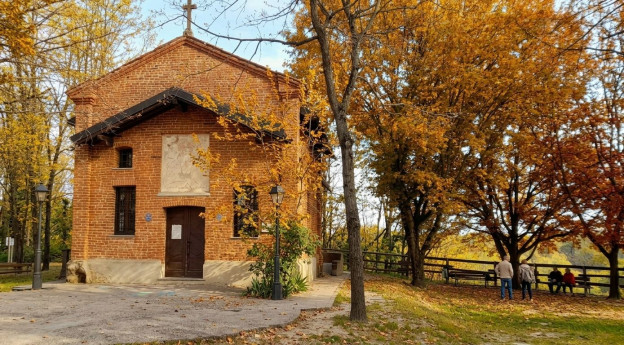
The final stop leads to San Giacomo della Cerreta, near Belgioioso, where a small brick church rises in open countryside on the left bank of the Po, its apse almost touching the wall of a farmstead. Now privately owned, it is one of the least-known gems of the Pavia plain.
Its origins go back to the thirteenth century and to the hospice of the Cerreta, documented since at least 1251 along the ancient Via Francigena. Here pilgrims from many lands, united by their devotion to Saint James and the Virgin, found prayer, shelter and rest; the present building, erected in the first half of the fifteenth century, bears witness to the high standard reached by Lombard terracotta architecture.
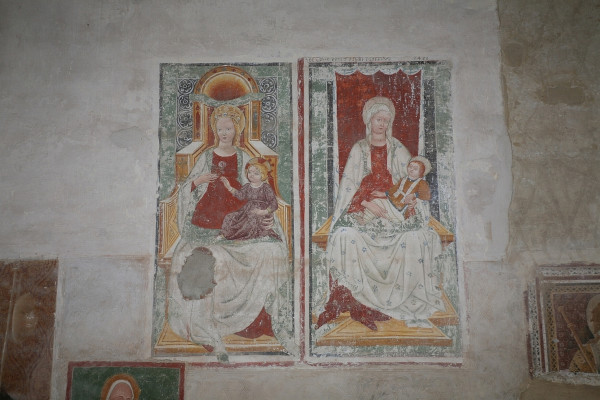
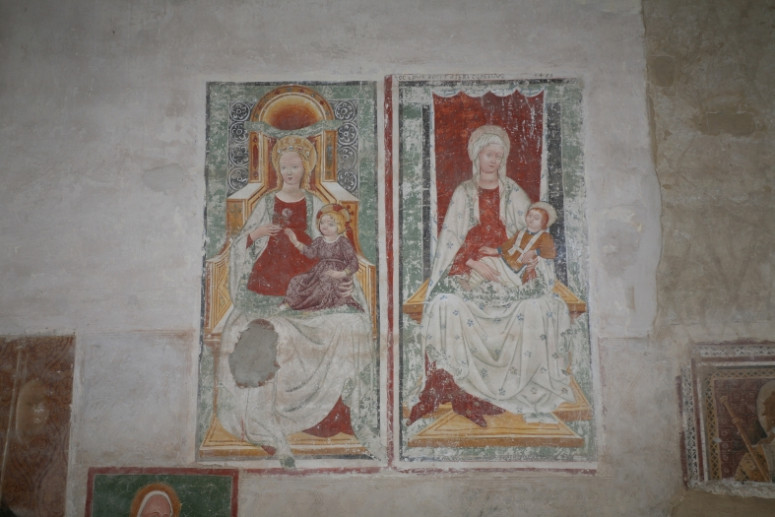
The interior is the true treasure of the visit. It holds a cycle of fifteenth-century frescoes ascribed to the Lombard school of Giovanni da Caminata, alongside an enthroned Madonna and Child attributed to Vincenzo Foppa, one of the founding fathers of the Lombard Renaissance. A life-size wooden statue of Saint James, dating from the mid-fifteenth century, completes the visit.
Those wishing to extend their day will find, just a few kilometres away, the town of Belgioioso with its castle, and the riverside landscape where the Ticino meets the Po.
Practical information: date, meeting point, fees and booking
The tour takes place on Saturday 7 November 2026. Welcome and registration begin at 2.30 pm in Valle Salimbene, in Via Valle near number 20, just outside Pavia towards Cremona; the GPS coordinates of the meeting point are 45.177, 9.233.
The full tour lasts about two hours. The three stops are roughly five kilometres apart in total and are reached with your own transport, always following the Touring Club volunteers.
Participation is by donation: 5 euros for Touring Club members and 7 euros for non-members, payable on site. The fee covers the scheduled visits, assistance from the Pavia branch of the Touring Club and civil liability and accident insurance; places are limited to 40 participants.
Bookings are open from 25 October to 5 November 2026 by email at pavia@volontaritouring.it. On the day of the tour, information is available at +39 339 184 1451.
Frequently asked questions
When and where does "A Triptych on the Pilgrims' Way" take place?
The guided tour by the Pavia branch of the Touring Club Italiano takes place on Saturday 7 November 2026, meeting at 2.30 pm in Valle Salimbene (province of Pavia), in Via Valle near number 20. It visits three places east and south of Pavia: Valle Salimbene, Vaccarizza in the municipality of Linarolo, and San Giacomo della Cerreta near Belgioioso.
How much does it cost and how do I book?
The donation is 5 euros for Touring Club members and 7 euros for non-members, payable on site. Bookings are accepted from 25 October to 5 November 2026 by email at pavia@volontaritouring.it, up to a maximum of 40 participants.
How do participants travel between the stops?
The three stops are about five kilometres apart in total and are reached with your own transport, following the Touring Club volunteers. The whole tour lasts about two hours.
Why is San Damiano called the Church of the Knights of Malta?
The oratory of San Damiano in Valle Salimbene was the seat of a commandery of the Order of Saint John of Jerusalem, later known as the Order of Malta, and in 1525 it inherited the title of the nearby commandery destroyed during the French siege of Pavia. Its 1914 heritage listing records it as the Church of Saints Protasius and Damian of the Order of Malta.
What is the Christ of Vaccarizza?
It is a medieval bas-relief of the Crucifixion, dated between the twelfth and thirteenth centuries and kept in a private chapel in Vaccarizza, a hamlet of Linarolo. It is venerated as a miraculous image and linked to the legend of a Po flood that stopped at the feet of Christ.
Who painted the frescoes in San Giacomo della Cerreta?
The church holds a fifteenth-century fresco cycle ascribed to the Lombard school of Giovanni da Caminata and an enthroned Madonna and Child attributed to Vincenzo Foppa. It also houses a life-size wooden statue of Saint James from the mid-fifteenth century.
What is the connection between Pavia and the Via Francigena?
Pavia was a key stage on the Via Francigena, the medieval pilgrimage route linking northern Europe with Rome. Hospices and places of worship for pilgrims sprang up in its surroundings, such as the hospice of the Cerreta, documented since 1251.
Attachments
Scarica la locandinaOther links
Facebook